Top Wire Harness Solutions for Global Buyers in 2026?
As the global demand for advanced technology increases, the importance of wire harness solutions becomes undeniable. Industry expert Jane Thompson emphasizes, "Efficient wire harness solutions are critical for seamless product integration." In 2026, businesses need to prioritize these solutions to ensure they stay competitive.
Wire harness solutions streamline electrical connections in numerous applications, from automotive to aerospace. Manufacturers must adapt to evolving consumer needs while enhancing efficiency and reliability. This balance requires not only innovative designs but also rigorous quality standards.
However, achieving excellence in wire harness solutions can be challenging. Companies often struggle with the complexity of integration and cost management. Reflecting on these hurdles is crucial. What if we could optimize production without compromising quality? The future demands answers to these questions. The journey toward effective wire harness solutions is ongoing, and every step matters.

Top Trends in Wire Harness Manufacturing for 2026
As we look forward to 2026, the wire harness manufacturing sector is undergoing significant changes. Sustainability is a key driver for manufacturers. Many companies are exploring eco-friendly materials. This shift not only meets consumer demand but also reduces environmental impact. Innovative designs are emerging, ensuring products are lightweight yet durable. Such advancements cater to diverse industries, from automotive to aerospace.
Automation is revolutionizing wire harness production. Factories are increasingly adopting smart technologies. Robot-assisted assembly can enhance precision and efficiency. However, integrating these technologies poses challenges. Not all manufacturers are equipped to undergo such a transformation. Training staff and upgrading machinery require careful planning and investment.
Customization remains a prominent trend. Buyers want wire harnesses tailored to specific needs. This desire for uniqueness pushes manufacturers to adopt flexible production lines. However, achieving this flexibility can lead to complications in inventory management. Striking a balance between standardization and customization is crucial. Collectively, these trends illustrate a landscape of innovation, challenges, and opportunities in wire harness manufacturing for 2026.
Top Wire Harness Solutions for Global Buyers in 2026
This chart displays the projected demand for various types of wire harness solutions in 2026, highlighting the top trends in wire harness manufacturing.
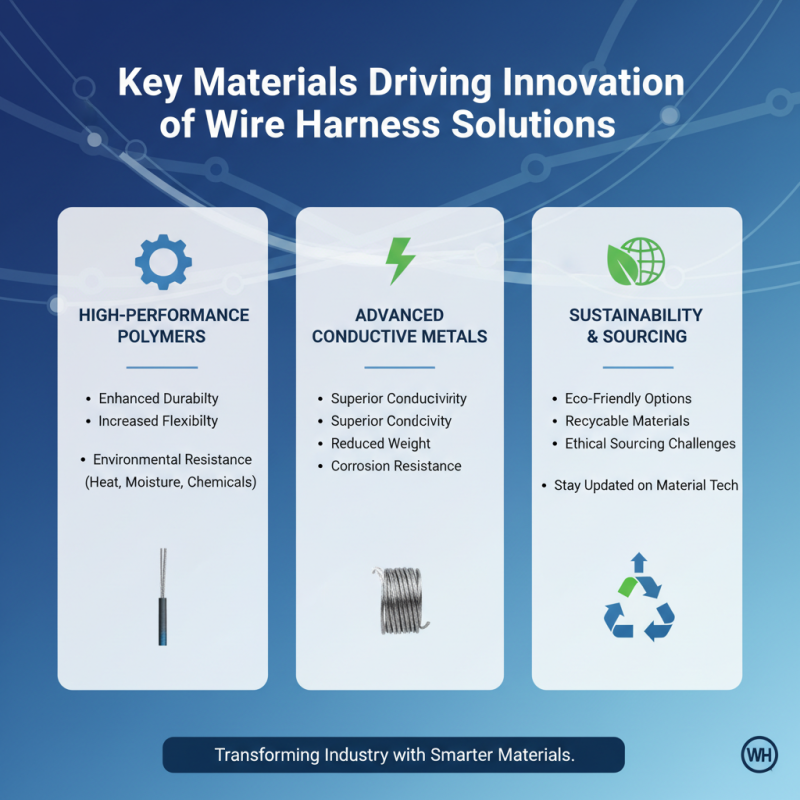
Key Materials Driving Innovation in Wire Harness Solutions
Innovation in wire harness solutions is heavily influenced by the materials used in their construction. In recent years, advancements in materials such as high-performance polymers and conductive metals have transformed the industry. These materials provide enhanced durability, flexibility, and resistance to environmental factors. However, sourcing these materials can be challenging. Manufacturers must stay updated on material performance and sustainability concerns.
The growing demand for lightweight and high-strength materials is reshaping wire harness designs. Composite materials are becoming popular due to their strength-to-weight ratio. These composites can reduce overall weight, which is crucial for automotive and aerospace applications. Yet, transitioning to new materials often requires significant investment and retraining for engineers. This creates a gap between innovation and implementation.
In addition, advancements in conductive materials like copper-alternative alloys could pave the way for better efficiency. These alloys can reduce energy loss and improve overall performance. However, the complexity in manufacturing processes must be evaluated. Cost efficiency versus performance is a lingering dilemma. It is essential for buyers to navigate these challenges while seeking the best solutions for their needs.
Market Analysis: Growth Projections in the Wire Harness Sector
The wire harness industry is set for significant growth in 2026. Analysts project an increase fueled by advancements in technology and expanding markets. As automation and electric vehicles surge, demand for efficient wire harness solutions will also rise. This growth translates into opportunities for buyers seeking innovative solutions to meet their needs.
Tips: Always consider the specific requirements of your project before choosing wire harnesses. Customization can significantly enhance performance and reliability.
The complexity of wire harness designs presents challenges. Producers must navigate evolving regulations and technological standards. Buyers should remain vigilant in evaluating potential suppliers’ expertise in these areas. Ensuring the right partners can mitigate risks and enhance project outcomes.
Tips: Look for suppliers with a proven track record in innovative solutions. This can save time and reduce the risk of errors. Continuous learning about industry trends is essential to stay competitive.
Technological Advancements Impacting Wire Harness Production
The evolution of wire harness production is increasingly driven by technological advancements. Automation and robotics are now essential. They enhance efficiency while reducing human errors. Smart factories utilize IoT technology. This connectivity streamlines operations and provides real-time data for better decision-making.
Tips: Keep an eye on new materials. Innovations in lightweight composites improve durability and performance. However, balancing cost and quality remains challenging. Consider sustainability practices too. Eco-friendly materials are becoming more popular.
Another significant trend is the application of artificial intelligence. AI predicts maintenance needs and optimizes production schedules. This reduces downtime and increases productivity. Evolution is crucial. Traditional methods may no longer suffice in a competitive landscape.
Remember to assess your suppliers. Look for those who invest in technology and innovation. Yet, not all new technologies are foolproof. Testing and validation are essential before full adoption. Embrace change, but remain cautious.
Top Wire Harness Solutions for Global Buyers in 2026
| Dimension |
Data Type |
Value |
| Market Size (USD Billion) |
Estimated |
$80.5 |
| Growth Rate (%) |
CAGR |
5.2 |
| Leading Sector |
Key Usage |
Automotive |
| Key Technology |
Advancement |
Smart Manufacturing |
| Main Region |
Market Focus |
Asia Pacific |
| Emerging Trend |
Innovation |
Eco-friendly Materials |
Sustainability Practices in Wire Harness Supply Chains for 2026
Sustainability is becoming a priority in wire harness supply chains. By 2026, environmental concerns will shape procurement strategies. Reports show that over 70% of buyers now prefer suppliers with sustainable practices. This shift in purchasing patterns reflects a broader commitment to reducing carbon footprints.
Efforts toward sustainability include using recyclable materials and minimizing waste. Data shows that companies adopting eco-friendly methods can see a 15% reduction in production costs. However, challenges remain. Not all suppliers are equipped to meet these new standards, leading to inconsistencies in supply chains.
Tip: Evaluate suppliers based on their sustainability certifications. Scrutinize material sourcing and waste management practices. Engaging with suppliers who benchmark on sustainability is crucial for compliance and reputation.
To truly harness sustainability, companies must invest in training and technology. Reports indicate that only 40% of automotive harness manufacturers are fully implementing green initiatives. Fostering a culture of environmental responsibility among workers is essential. The path to sustainability is ongoing and requires continuous reflection and improvement.