China Top Silicon Nitride Manufacturers for Global Buyers?
China has become an important sourcing base for advanced ceramic materials, including Silicon Nitride. Its manufacturers serve bearing, semiconductor, automotive, aerospace, and industrial equipment markets. However, “top” should not mean the largest factory alone. It should indicate stable quality, technical depth, and dependable export performance.
Grand View Research estimates that the global silicon nitride market reached approximately USD 115 million in 2023. The same report expects continued growth through 2030, driven by electric vehicles, semiconductor equipment, and high-temperature components. Other market studies report different values because they classify powders, ceramics, and finished parts differently. That inconsistency deserves attention. Buyers should verify the report scope before using market figures for investment decisions.
China’s leading suppliers typically offer reaction-bonded, hot-pressed, and pressureless-sintered grades. A serious evaluation should examine alpha-to-beta phase content, density, flexural strength, fracture toughness, thermal conductivity, and dimensional tolerance. Ask for recent certificates of analysis, batch traceability, and test methods. A polished datasheet is not enough.
Production details matter in practice. Powder preparation affects shrinkage. Sintering affects porosity. Grinding affects final tolerances. A bearing ring that appears smooth may still fail under repeated thermal cycling. Suppliers with ISO 9001 systems, documented process controls, and application-testing experience provide stronger evidence of reliability. Yet certification alone cannot prove performance.
This guide examines China’s notable Silicon Nitride manufacturers from a global buyer’s perspective. It compares product capabilities, industries served, quality documentation, customization support, lead times, and export communication. The assessment remains practical rather than absolute, because supplier rankings change with project requirements. The best partner for a semiconductor component may not suit a heavy-duty bearing application.
China’s Role in the Global Silicon Nitride Market
China has become an important manufacturing base in the global silicon nitride market. Its role extends beyond low-cost production. Chinese producers supply ceramic components for bearings, semiconductor equipment, medical devices, and high-temperature systems. These applications require stable density, controlled grain structure, and traceable testing.
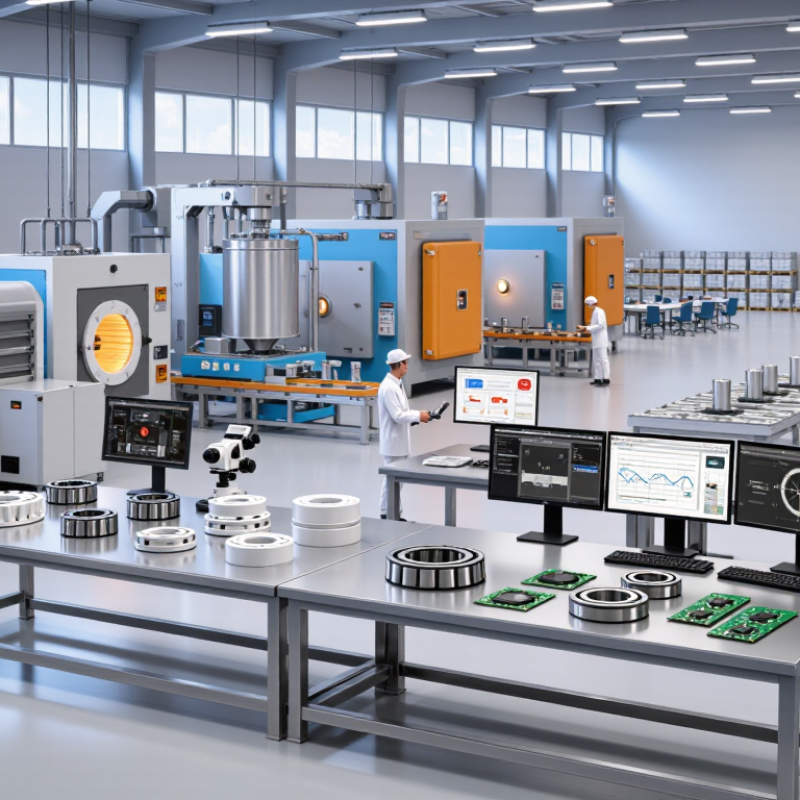
Many factories now combine powder processing, injection molding, hot pressing, and precision grinding. This integrated capability can shorten development cycles for global buyers. A procurement team may inspect a sample ring, review dimensional data, and compare fracture toughness before approving a batch. Export experience also supports packaging, documentation, and communication across technical standards. Still, capability varies widely. A polished website proves little. On-site audits and independent laboratory checks remain valuable.
China’s expanding technical workforce is improving process control and custom engineering. Manufacturers can adjust material grades for wear resistance, thermal shock, or electrical insulation. This flexibility helps buyers move from prototypes to repeat production. Yet the market has weaknesses. Some suppliers rely too heavily on catalog specifications and under-explain defects. Lead times may change when tooling or raw material quality shifts. Experienced buyers should request batch records, inspection plans, sample retention, and clear acceptance limits. They should discuss failure analysis before signing a large order. Small details matter. A surface chip can damage a seal, while inconsistent shrinkage can disrupt assembly. China’s position is strong, but reliability depends on verification, transparent data, and steady supplier dialogue.
China’s Role in the Global Silicon Nitride Market
Typical density ranges of major silicon nitride ceramic grades used in global industrial applications. Higher density generally supports improved mechanical strength and wear resistance, while reaction-bonded grades are valued for cost efficiency and complex shapes.
Values are representative industry ranges expressed as midpoint estimates in g/cm³. Actual specifications vary by powder purity, sintering method, additives, and application requirements. China is a major manufacturing base for silicon nitride powders, ceramic components, wear parts, and engineering applications serving both domestic and export markets.
Key Types and Properties of Silicon Nitride Products
Silicon nitride products are not one uniform category. Global buyers commonly compare reaction-bonded, pressureless-sintered, hot-pressed, and gas-pressure-sintered grades. Reaction-bonded silicon nitride often supports complex shapes and lower shrinkage, but residual silicon may limit high-temperature performance. Pressureless-sintered grades offer balanced strength and cost for bearings, seals, and kiln components. Hot-pressed grades usually provide high density and strength, although their shape and size can be restricted. Gas-pressure-sintered material can deliver strong mechanical performance in demanding environments. Details matter.
A reliable specification should state density, flexural strength, fracture toughness, thermal conductivity, hardness, and service temperature. Silicon nitride is lightweight, electrically insulating, wear-resistant, and stable against many corrosive media. Its low thermal expansion helps it withstand rapid heating and cooling better than many oxide ceramics.
However, thermal conductivity varies with grade and sintering additives. Surface finish also affects seal leakage, bearing life, and fatigue behavior. Buyers should request test methods, dimensional tolerances, and batch records, not only headline values.
Strength alone can mislead. A component exposed to molten metal, vacuum, or repeated impact needs different priorities. Machining damage, porosity, and joining design may change field performance. Some published data appear precise, yet testing conditions differ. Independent verification is wise. Ask for samples. Inspect them. Then compare performance with the actual load cycle, rather than an ideal laboratory chart.
Leading Chinese Silicon Nitride Manufacturers and Their Capabilities
China’s leading silicon nitride manufacturers serve industries that demand strength, heat resistance, and stable electrical insulation. Their capabilities often cover powder preparation, ceramic forming, sintering, grinding, and final inspection. This integrated workflow can reduce handling errors and improve batch consistency.
Many experienced producers offer reaction-bonded, pressureless-sintered, and hot-pressed silicon nitride parts. They manufacture bearings, heater components, cutting tools, and custom structural ceramics. Buyers should request data on density, purity, hardness, fracture toughness, and thermal conductivity. Dimensional control matters too, especially for thin rings and precision shafts. A reliable supplier should explain its testing methods, sampling rules, and traceability records clearly.
Factory audits can reveal details that catalogs miss. Check powder storage, furnace records, surface defects, and packaging protection. Export-ready manufacturers usually provide technical drawings, inspection reports, and material certificates. They may also support CNC machining for complex tolerances, though machining costs can rise quickly. A polished datasheet is not enough. Some explanations remain vague. Buyers should compare several trial batches before approving regular production. This step takes time, but it exposes shrinkage changes, uneven surfaces, or inconsistent color. Clear communication with engineers is equally important, because a small change in operating temperature can affect the ceramic grade and service life.