China Top Mini Server Rack Suppliers for Global Buyers?
China Top Mini Server Rack Suppliers for Global Buyers?
A Mini Server Rack is no longer limited to large data centers. It now supports retail stores, branch offices, workshops, classrooms, and compact edge-computing sites. Buyers often need secure equipment storage without sacrificing valuable floor space. A small rack may hold switches, patch panels, UPS units, and several short-depth servers. Its steel frame must still manage heat, cable movement, vibration, and physical access.
Schneider Electric’s edge-computing expert Steven Carlini has said, “Edge computing is not a location; it is a concept.” This view helps explain why Chinese Mini Server Rack suppliers serve such varied international markets. Their products may include wall-mounted cabinets, floor-standing enclosures, sound-reduced racks, and customized solutions for unusual rooms. However, attractive pricing alone proves little. Door strength matters. So does grounding.
Global buyers should examine steel thickness, rack-unit accuracy, ventilation openings, caster quality, lock design, packaging, and installation instructions. They should also request test reports, product drawings, sample units, and clear warranty terms. Reliable suppliers can explain heat-load limits instead of offering vague claims. They should understand international shipping, labeling, and regional electrical requirements.
The details are easy to underestimate. A rack placed beside a dusty production line needs different protection from one installed in an office corridor. A quiet fan can still create uncomfortable noise at night. Some supplier pages look impressive, but their technical information remains incomplete. That is worth questioning.
This guide compares China’s leading Mini Server Rack suppliers through product quality, customization ability, manufacturing experience, export service, and buyer feedback. The ranking may not fit every project. Careful verification remains essential.
What Is a Mini Server Rack and Why Source It from China?
What Is a Mini Server Rack and Why Source It from China?
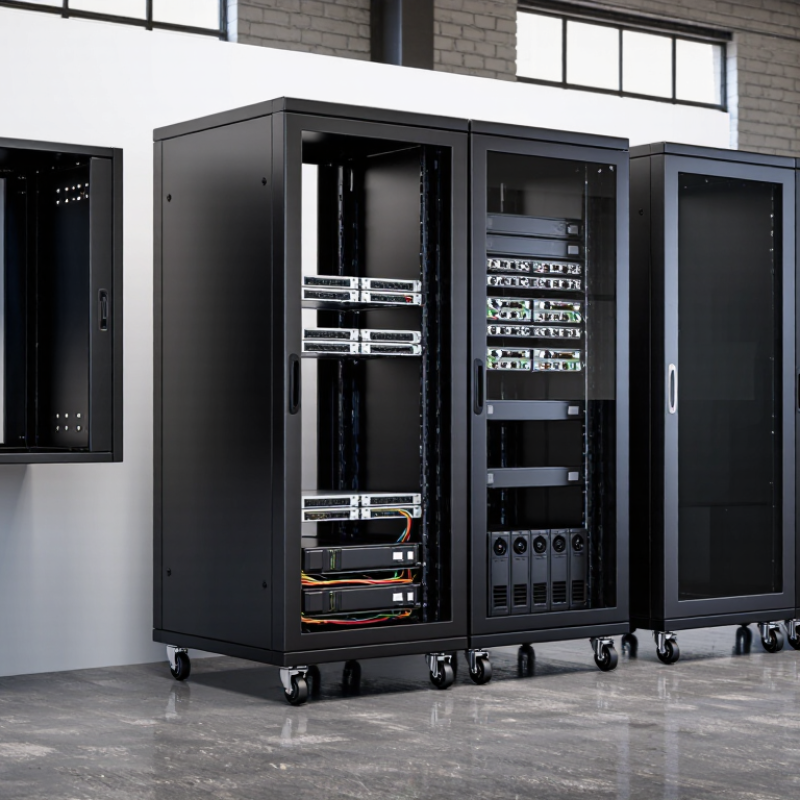
A mini server rack is a compact enclosure for network switches, patch panels, routers, and small servers. Most models use the standard 19-inch mounting width. Common sizes range from 6U to 15U, with depths near 450–600 millimeters. They fit beside a desk, inside a retail cabinet, or beneath a counter. Space matters.
In practical installations, a good mini rack needs more than metal panels. Check the usable depth, rail adjustment, cable openings, airflow path, grounding points, and load rating. Uptime Institute’s Global Data Center Survey 2024 reported that 53% of operators experienced an outage during the previous three years. Poor ventilation or overloaded shelves can turn a compact cabinet into a hot box. That detail is easy to miss.
China is attractive because its manufacturing network combines sheet-metal processing, powder coating, locks, fans, casters, and packaging in one sourcing region. Buyers can request custom dimensions, flat-pack designs, or private labeling with relatively low tooling barriers. The International Energy Agency reported that data-center electricity demand is expected to rise sharply through 2030, making airflow and efficient cooling more important. Still, low price is not proof of quality. I would ask for material thickness, U-space drawings, load tests, inspection photos, and sample approval before a larger order. One weakness remains: supplier documents may look complete while practical assembly feels awkward. Test the rack with real equipment, not an empty cabinet.
China Top Mini Server Rack Suppliers for Global Buyers: What Is a Mini Server Rack?
A mini server rack is a compact enclosure designed to organize networking, computing, and communication equipment. Rack height is measured in rack units (U), with 1U equal to 44.45 mm of vertical mounting space.
How to read the chart: The values show the approximate usable vertical mounting height of common mini rack configurations. These figures are calculated from the international 1U rack-unit standard and are useful when comparing compact rack options for global sourcing.
Leading Supplier Types and Manufacturing Regions in China
China’s mini server rack supply base is not one uniform market. Buyers usually meet four supplier types: metal cabinet fabricators, OEM/ODM manufacturers, network equipment integrators, and export-focused distributors. Cabinet fabricators specialize in steel cutting, powder coating, and custom dimensions. OEM/ODM factories can add wiring layouts, fans, shelves, and protective packaging. Integrators combine racks with power distribution and cooling components. Distributors offer faster sampling, but their technical control may be limited. Ask for drawings, test records, and production photos.
Shenzhen and Dongguan support dense electronics and sheet-metal ecosystems. They suit compact racks with cable panels, locks, and thermal accessories. Ningbo and nearby Zhejiang factories often provide mature metalworking and export experience. Suzhou and other Jiangsu manufacturing areas can support precision fabrication and larger production plans. Regional strengths overlap, though. A factory’s location does not prove its capability.
During supplier audits, inspect weld seams, grounding points, rail alignment, and carton compression. Test the sample with loaded shelves and repeated door opening. Verify quality certificates through the issuing organization. Ask which safety and electrical standards apply in the destination market. A polished sample can hide weak production control. Low prices can also conceal thin steel or poor packaging. That mistake is easy to make. Recheck material thickness, tolerances, and replacement procedures before approving volume production.
China Top Mini Server Rack Suppliers for Global Buyers? - Leading Supplier Types and Manufacturing Regions in China
| Supplier Type | Main Manufacturing Regions | Typical Product Range | Common Rack Units | Typical Material | Customization Capability | Typical MOQ | Typical Production Lead Time | Best Fit for Global Buyers |
| Rack Enclosure Manufacturers | Guangdong; Jiangsu; Zhejiang | Wall-mount racks, floor-standing mini racks, network cabinets | 6U–18U | Cold-rolled steel, commonly 0.8–1.5 mm panels | High; dimensions, doors, rails, locks, fans and cable entry can be modified | Usually 10–50 units for standard models; higher for custom tooling | About 15–35 days after design approval | Distributors, system integrators and data-network installers |
| Sheet-Metal Fabrication Suppliers | Shenzhen; Dongguan; Suzhou; Ningbo | Flat-pack enclosures, short-depth server cases, custom chassis | 2U–12U | Galvanized or cold-rolled steel; aluminum for lightweight parts | Very high; suitable for drawings, prototypes and private-label projects | Typically 20–100 units, depending on process and finish | About 20–45 days, including sample confirmation | OEM buyers requiring non-standard depth, height or mounting layouts |
| Electrical Cabinet Manufacturers | Zhejiang; Jiangsu; Guangdong | Network cabinets with power distribution, ventilation and access control | 6U–24U | Powder-coated steel with copper or aluminum electrical accessories | Medium to high; power modules and cooling layouts are commonly configurable | Usually 20–100 units | About 20–40 days for standard configurations | Industrial networking, edge computing and telecom installations |
| IT Infrastructure Integrators | Beijing; Shanghai; Shenzhen; Guangzhou | Rack packages combining enclosures, PDUs, shelves, fans and cable accessories | 6U–18U | Steel cabinets with integrated electrical and networking components | Medium; configuration is customized more often than cabinet tooling | Often 5–30 complete kits | About 10–30 days, subject to component availability | Projects needing a tested, ready-to-install mini rack solution |
| Export-Oriented Trading Manufacturers | Shenzhen; Ningbo; Yiwu; Guangzhou | Standard mini racks, network cabinets and related accessories | 4U–18U | Powder-coated steel; specifications vary by production partner | Medium; packaging, color and accessory combinations are commonly adjustable | Commonly 10–50 units for stocked products | About 7–25 days for available standard products | Small importers and buyers testing new markets |
| Telecom and Outdoor Enclosure Suppliers | Guangdong; Zhejiang; Fujian | Weather-resistant mini racks, outdoor cabinets and edge-network enclosures | 6U–15U | Powder-coated steel, aluminum or stainless steel for demanding environments | High; sealing, thermal management, mounting plates and locks can be specified | Typically 10–50 units | About 25–50 days depending on environmental testing | Telecom operators, outdoor surveillance and edge-computing deployments |
Buyer reference: Rack-unit capacity follows the standard 19-inch rack format, while actual usable depth, load rating, ventilation, power distribution and compliance requirements should be confirmed against the supplier’s technical drawings before ordering.
How Global Buyers Can Evaluate Quality, Pricing, and Certifications
China Top Mini Server Rack Suppliers for Global Buyers
How Global Buyers Can Evaluate Quality, Pricing, and Certifications
A reliable mini server rack supplier should provide more than attractive product photos. Check steel thickness, weld quality, door alignment, grounding points, and coating durability. Ask for a sample before placing a large order. Measure its internal depth, usable height, cable space, and ventilation. A rack can look sturdy yet flex under real equipment loads. This detail is often missed.
Pricing needs a wider view. Compare the rack, packaging, accessories, delivery terms, replacement parts, and possible import charges. Confirm the minimum order quantity and production lead time in writing. Request a detailed quotation with clear specifications. Certifications also require careful review. ISO 9001 can indicate controlled production processes, while CE or RoHS documents may support specific market requirements. However, certificates should match the exact product model, not a similar item. Verify test reports, issuing bodies, document dates, and traceability. A polished PDF is not proof by itself. That is where buyers sometimes become too confident.
Tips: Request a factory video inspection or independent audit. Test one sample with your intended switches, patch panels, and power equipment. Check carton strength after shipping. Keep approval records, drawings, and inspection photos. If a supplier avoids technical questions, pause the order. A slightly higher price may reduce rework, but this is not always true. Compare evidence, not promises.