Top 10 Benefits of Using a Flail Mower Machine for Efficient Land Care?
In the realm of land management, the Flail Mower Machine stands out for its versatility and efficiency. John Anderson, a renowned expert in agricultural machinery, emphasizes its importance: “A flail mower transforms landscape care, making it simpler and more effective.” This statement encapsulates the machine's impact on modern land maintenance.
The Flail Mower Machine excels in cutting grass and vegetation, achieving a clean finish. It's ideal for tackling overgrown areas and keeping fields tidy. Its design allows for effective mulching, providing natural ground cover that enriches the soil. As a result, users observe healthier ecosystems in their landscapes.
Moreover, the flail mower promotes safety in operation. Its ability to handle varying terrains ensures users can work confidently. However, improper use may lead to inefficiencies or accidents. It’s crucial to understand its mechanics fully for optimal performance. Overall, the Flail Mower Machine not only simplifies land care but also contributes positively to the environment when used correctly.
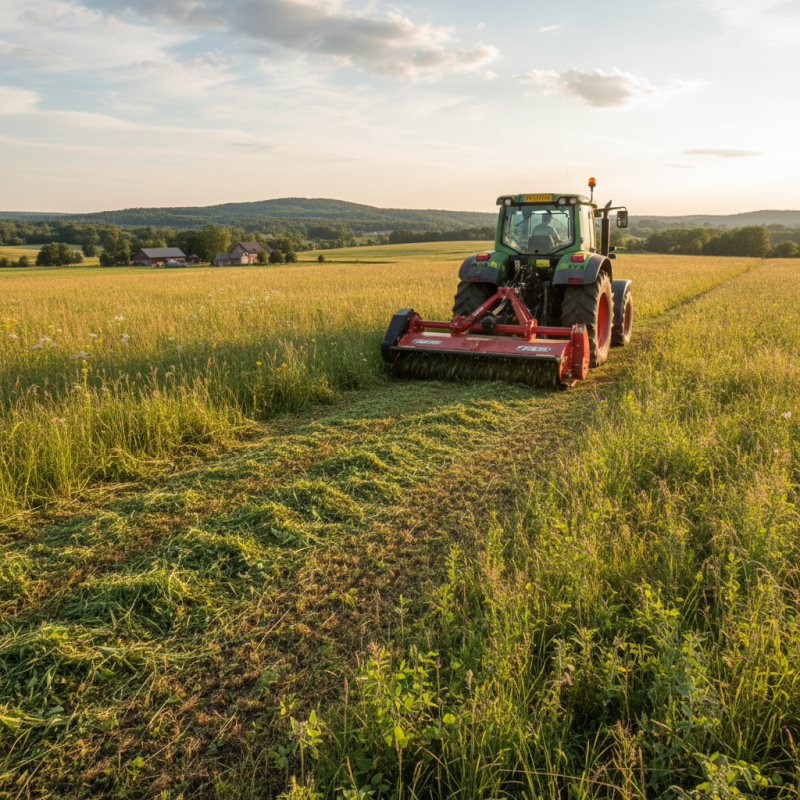
Overview of Flail Mower Machines and Their Mechanism
Flail mowers are innovative tools designed for efficient land care. They use rotating blades attached to a horizontal shaft to tackle dense vegetation. This mechanism allows them to cut grass, brush, and even small trees effectively. The flail mower's design ensures that it produces finely chopped material, which decomposes and enriches the soil. Users often appreciate this feature, as it promotes healthy land management practices.
The versatility of flail mowers sets them apart from traditional mowers. They can navigate uneven terrain and steep slopes. This adaptability is crucial for landowners managing rough landscapes. However, it's important to note that operating a flail mower requires skill. Mishandling can lead to uneven cuts or damage to the machine. Familiarity with the equipment enhances performance and prevents breakdown. Each mower has its limitations, and knowing these is essential for optimal use. Balancing power and finesse can sometimes be a challenge.
Overall, flail mowers bring notable advantages to land care. They save time while providing an effective cutting mechanism. With proper knowledge, the efficiency of these machines can be maximized, leading to healthier landscapes. Awareness of their functioning and potential pitfalls adds to their effective use in maintaining land.
Advantages of Flail Mowers in Landscape Maintenance
Flail mowers offer unique advantages in landscape maintenance. These machines excel in tackling overgrown vegetation. They are perfect for fields, pastures, and roadways. The rotating blades efficiently shred debris. This action leaves smaller clippings that decompose rapidly. As a result, the ground benefits from enhanced nutrient recycling.
Using a flail mower improves safety during landscape work. With a robust design, these mowers minimize the risk of flying debris. This makes them safer for operators and surrounding areas. Their versatility allows for cutting various vegetation types, from tall grasses to dense bushes. However, they require skilled operation. Improper use may lead to uneven cuts or damage.
Routine maintenance is crucial with flail mowers. Regular blade sharpening ensures clean cuts and efficient operation. Neglect can lead to poor performance and costly repairs. While they deliver excellent results, operators must be mindful of limitations. Some terrains can prove challenging for specific models. Each land care situation demands careful consideration and expertise for the best results.
Top 10 Benefits of Using a Flail Mower Machine for Efficient Land Care
| Benefit | Description | Impact on Land Care |
| Versatility | Can handle various types of vegetation, including grass, weeds, and brush. | Suitable for diverse landscapes and seasonal maintenance. |
| Efficiency | Cuts and mulches simultaneously, reducing operational time. | Saves labor costs and enhances productivity. |
| Durability | Robust construction designed to withstand tough conditions. | Reduces maintenance frequency and extends machinery lifespan. |
| Eco-Friendly | Minimally invasive, promoting natural decomposition and soil health. | Supports sustainable land management practices. |
| Cost-Effective | Reduced need for chemical herbicides and fertilizers. | Lowers overall landscape maintenance expenses. |
| Maneuverability | Easy to operate in tight areas and challenging terrains. | Increases accessibility to hard-to-reach areas. |
| Safety Features | Designed with safety in mind, minimizing operator risk. | Ensures a safer work environment when maintaining landscapes. |
| Quality of Cut | Produces a fine mulch that enriches the soil. | Enhances aesthetic appeal and soil fertility. |
| Reduced Soil Compaction | Less pressure on the ground compared to conventional mowers. | Preserves soil health and structure. |
| Improved Weed Control | Cuts stubborn weeds at the base, preventing regrowth. | Enhances the overall health of the landscape. |
Comparison of Flail Mowers with Traditional Mowers
Flail mowers stand out when compared to traditional mowers. They are designed for heavy-duty tasks. Their rotary blades chop grass and vegetation. This creates finer mulch, which decomposes faster. Studies show that flail mowers can reduce the need for fertilizers by up to 30%. This not only saves costs but also promotes healthier soil.
One significant advantage of flail mowers is their ability to handle rough terrain. Traditional mowers often struggle in uneven fields. Flail mowers, however, excel in cutting through tall grass and weeds. They can easily tackle brush and small saplings. According to agricultural reports, flail mowers are capable of managing land densities of up to 25 tons per hour.
Tips: Ensure you maintain your flail mower regularly. Regular blade sharpening is essential for optimal performance. Also, consider the terrain when selecting your mower. Some models are better suited for specific conditions.
Moreover, a flail mower’s versatility is another advantage. It can be used for cleaning up fields post-harvest. This efficiency can significantly reduce labor costs. However, ensure the operator is trained. Misuse can lead to wear and tear or accidents. Investing in training can ultimately save time and enhance safety.
Top 10 Benefits of Using a Flail Mower Machine for Efficient Land Care
This chart compares the top 10 benefits of using a flail mower compared to traditional mowers, highlighting efficiency and versatility in land care.
Environmental Benefits of Using Flail Mowers
Flail mowers are a powerful tool for land care, offering significant environmental benefits. These machines efficiently chop vegetation, enabling faster decomposition. This process returns nutrients to the soil, enhancing its fertility. Healthy soil supports plant growth and improves overall ecosystem health.
Using flail mowers helps control invasive species, a common challenge in land management. By regularly cutting back unwanted plants, native species have a better chance to flourish. However, improper use can lead to soil erosion or disturbance. It’s essential to operate these machines judiciously to avoid disrupting the balance of local habitats.
Moreover, flail mowers contribute to reduced emissions compared to traditional mowing equipment. They often require less energy, translating to lower fuel consumption. This reduction is a step towards greener land care practices. Nevertheless, users must remain aware of maintenance needs to ensure optimal performance. Regular checks prevent excessive emissions and mechanical failures, reinforcing the importance of responsible operation.
Cost-Effectiveness of Flail Mowers for Land Care Operations
Flail mowers have become increasingly popular for land care operations due to their cost-effectiveness. According to a report by the Agricultural Equipment Manufacturers Association, flail mowers can reduce mowing costs by up to 30% compared to conventional methods. This efficiency stems from their ability to handle dense vegetation and rough terrain. Their design allows them to mulch as they cut, which reduces the need for extensive cleanup and disposal.
Additionally, flail mowers provide versatility that adds to their economic appeal. Many models can be adjusted to different cutting heights, accommodating various landscape needs. This feature can lead to savings on both labor and fuel. A study conducted by the University of Kentucky indicated that using flail mowers resulted in a 20% reduction in fuel consumption during operations, a significant consideration for budget-conscious farmers and landscapers.
However, it's worth reflecting on some limitations. While flail mowers are efficient, they may struggle with very tall grass or woody materials. Users often report the need for additional time or equipment to manage particularly thick undergrowth. Balancing these challenges with the clear savings in regular operations is crucial for optimizing land care practices.