Essential Tips for Choosing a Small Cement Mixer for Concrete?
Choosing the right equipment is crucial for any concrete project. A Small Cement Mixer Concrete can be an excellent choice for those with limited space or smaller jobs. These mixers are compact, making them easy to store and transport, yet powerful enough to deliver quality results.
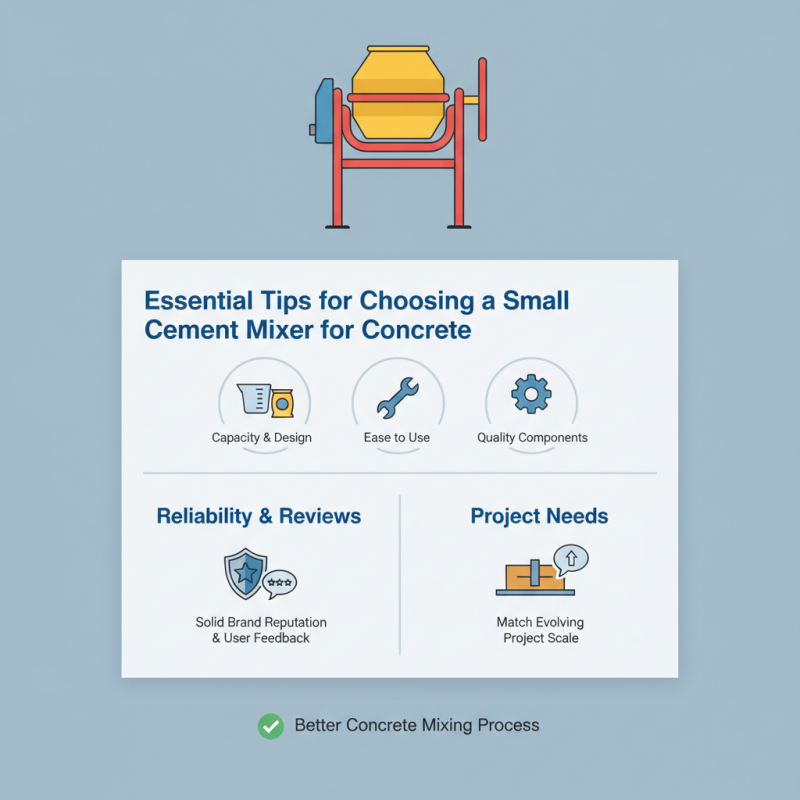
When selecting a small cement mixer, consider the capacity and design. A model that's too small may require multiple batches, wasting time. On the other hand, one that's too large may be cumbersome. Look for mixers that offer ease of use without sacrificing effectiveness. Each detail counts; the quality of the drum material and the efficiency of the mixing blades matter significantly.
Remember, investing in a reliable mixer leads to better outcomes. Think about whether the brand has a solid reputation. User reviews can shine a light on performance and durability. Reflecting on past experiences with mixers, many users realize their needs have evolved. Choose wisely; a well-suited small cement mixer enhances your concrete mixing process.
Understanding the Basics of Small Cement Mixers and Their Features
When considering a small cement mixer, it's essential to understand their features. These mixers typically range from 2 to 6 cubic feet in capacity. Most homeowners opt for models in the 3 to 4 cubic feet range. This size is optimal for small to medium projects. Notably, a 2019 industry report revealed that 75% of DIY enthusiasts prefer mixers that balance portability with power.
Choosing the right mixer involves examining several factors. The material of the drum is crucial. Steel drums offer durability, while plastic ones are lighter but less robust. Evaluate the mixer’s motor power, usually measured in amps. A more powerful motor means better performance, especially for tougher mixes. The report noted that models with at least a 1/2 horsepower motor are most popular among professional masons.
Tip: Prioritize ease of use. Mixers with foldable handles and sturdy wheels enhance mobility and storage. Check the warranty as well. A reliable warranty reflects the manufacturer's confidence in their product, which can prevent future headaches. Users often overlook this aspect, leading to issues down the road. Investing time in research can save money later.
Key Factors to Consider When Selecting a Small Cement Mixer
When selecting a small cement mixer, several key factors come into play. One of the most important considerations is the capacity of the mixer. Most small cement mixers come with a capacity of 2 to 4 cubic feet. A larger capacity may seem tempting, but it can make the mixer cumbersome. A good rule is to choose a model that suits your typical project size. Industry reports suggest that mixers with a capacity of 3 cubic feet are ideal for small to medium tasks, balancing portability and efficiency.
Power and motor performance are crucial as well. Many small mixers feature electric motors with a power range of 1 to 1.5 horsepower. A higher horsepower may lead to better mixing, but it can also increase electricity consumption. Professionals have observed that mixing speed significantly affects the work quality. Therefore, verify that the motor operates smoothly without intermittent failures. Another aspect to consider is the build quality of the mixer. Many mixers use reinforced steel frames, which provide stability but can be heavier. While lightweight options are easier to transport, they may compromise durability.
Lastly, think about the ease of maintenance and cleaning. A machine that is hard to clean often leads to downtime. Reports indicate that more compact designs can retain leftover cement, which adds to the hassle. Selecting a model with removable parts can simplify the cleaning process, making future projects more efficient. Think critically about these elements before making your decision. Each project has unique demands that may sway your choice.
Comparing Different Types of Small Cement Mixers Available
When choosing a small cement mixer, various types stand out. Each type has unique features that can impact your concrete mixing experience. Electric mixers offer convenience and consistency. They are ideal for small to medium projects and are easy to operate. Many offer a capacity of around 2 to 3 cubic feet, ensuring a manageable load.
On the other hand, gas-powered mixers provide more power and mobility. They are suitable for larger tasks and outdoor use. However, they can be heavier and may require more maintenance. Additionally, their noise level could be a consideration for residential areas.
Tow-behind mixers also enter the mix, offering mobility without sacrificing capacity. These can handle larger volumes but can be cumbersome to transport. Reflecting on these options, understanding your project’s specific needs is vital. Consider the scale, location, and frequency of use to make a better choice.
Assessing the Size and Capacity for Your Concrete Mixing Needs
Choosing the right size and capacity for a small cement mixer is crucial. It can influence the quality of your mixing and the efficiency of your work. A common mistake is underestimating the amount of concrete needed for a project. Projects vary greatly. Some require just a few bags of concrete, while others may demand larger quantities. A small mixer typically handles between 2 to 5 cubic feet of concrete. Therefore, consider the scope of your project to determine the right capacity.
Think about the type of projects you will tackle. For small repairs or DIY tasks, a compact mixer may suffice. However, for bigger jobs, a larger mixer will save time and energy. It’s easy to fall into the trap of buying a smaller mixer to save money, only to realize it limits your capability. Reflect on previous projects and how much concrete was needed. This will help you make an informed decision.
Always keep in mind the mixer’s mobility as well. A heavier, larger mixer can be cumbersome. If you plan to move it often, look for lighter options. However, heavier models often provide better mixing. Balancing size, weight, and capacity is key. Take time to assess your needs before making a choice. The right decision will ease your workflow, making your concrete tasks more effective.
Evaluating Price, Brand, and Warranty Options for Small Mixers
When selecting a small cement mixer, price, brand, and warranty options play a crucial role. Research shows that the average price range for small mixers is between $200 and $800. However, your budget may determine your choices significantly. It’s important to find a balance between affordability and quality. A cheaper model may save money upfront but could lead to higher repair costs over time.
Brand reputation also matters in your decision-making process. Many industry surveys highlight that established brands tend to offer better product reliability. Customers report fewer issues with well-reviewed mixers. However, do not overlook new entrants in the market, as they may offer innovative features at competitive prices.
Warranty options vary widely among products. Most mixers come with a one-year warranty, but some premium models offer longer coverage. A good warranty can provide peace of mind; it reflects a manufacturer’s confidence in their product. Investing in a model with better warranty terms might mitigate long-term risks, especially when dealing with frequent usage. Reflect on your specific needs to determine how warranty importance aligns with overall value.