Finding carbon steel pipe for sale in 2026 requires more than comparing online prices. Buyers must connect market data with practical inspection details. The World Steel Association’s World Steel in Figures 2025 reports approximately 1.88 billion tonnes of crude steel production in 2024. That scale shows strong industrial capacity, but it does not prove that every supplier offers reliable pipe. A large marketplace can still contain incomplete specifications, unclear origins, or outdated certificates.
The search should begin with the application. Define the pipe grade, outside diameter, wall thickness, length, end finish, and required standard. ASTM A53, ASTM A106, API 5L, and EN specifications serve different purposes. Check whether the pipe is seamless or welded. Confirm the material test certificate, heat number, chemical composition, and mechanical results. Traceability matters.
Price is only one signal.
UN Comtrade trade data, classified under HS 7304 and HS 7306, can help buyers study import patterns and supplier activity. However, trade statistics cannot replace factory audits or independent inspection. The OECD Steel Outlook also highlights continuing capacity and trade pressures across the steel industry, which may affect availability, freight costs, and delivery reliability in 2026. A cheaper quotation may conceal weaker documentation or longer lead times. That possibility deserves attention.
Reliable sourcing combines supplier experience, technical verification, and commercial discipline. Ask for recent project references, production photographs, inspection procedures, coating details, and clear Incoterms. The process is not perfectly linear. Recheck every assumption before placing an order.
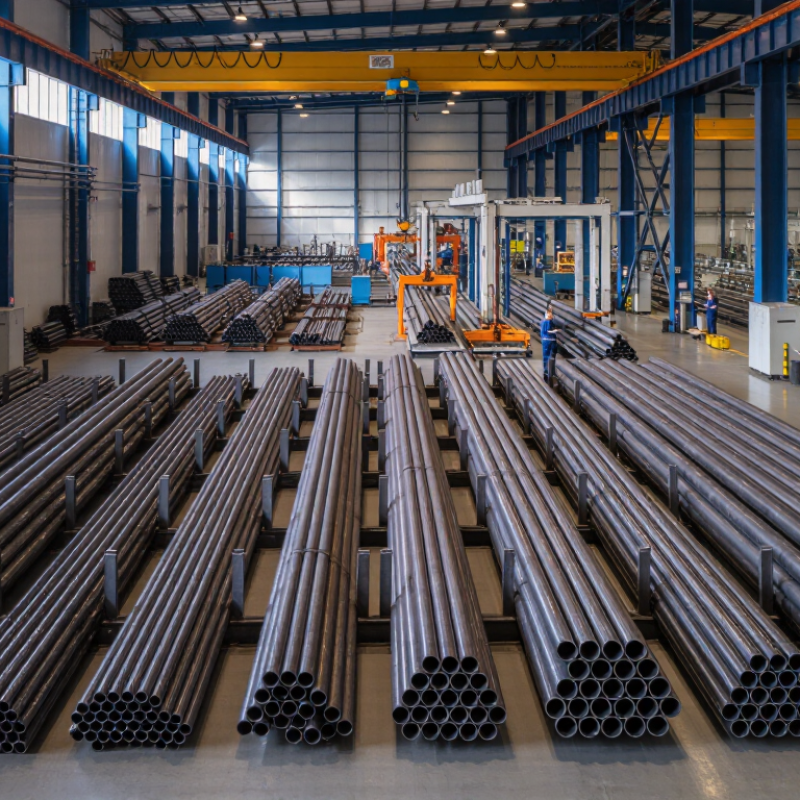
Carbon steel pipe is not one universal product. Its type determines where it can work safely. Seamless pipe is formed without a welded seam and suits high-pressure service, such as boilers, refineries, and hydraulic lines. Electric-resistance-welded pipe uses a longitudinal seam and is common in water systems, structural columns, and low-to-moderate pressure transport. Spiral-welded pipe uses a helical seam, making large diameters practical for water transmission and piling.
Chemistry matters too. Low-carbon steel is easier to weld and remains common in building and utility projects. Medium-carbon grades offer greater strength but demand tighter welding control. Pipe schedules also change wall thickness, weight, and pressure capacity. ASTM A53 generally covers mechanical and pressure applications, while ASTM A106 is widely specified for seamless high-temperature service. For oil and gas pipelines, buyers often review API 5L requirements, including grade, testing, and traceability.
Industry data shows why selection cannot rely on price alone. The World Steel Association reported global crude steel production of about 1.88 billion tonnes in 2023, highlighting the scale of steel supply behind pipe manufacturing. The International Energy Agency’s 2024 World Energy Outlook also projects continuing infrastructure demand across electricity and gas networks. Still, a large market does not guarantee a suitable pipe. Check outside diameter, wall thickness, grade, end finish, coating, test certificates, and service temperature. A cheaper pipe may fail the real project requirement. I have seen specifications copied too quickly, with corrosion exposure barely considered. That is an avoidable weakness.
When searching for carbon steel pipe for sale in 2026, define the pipe before contacting a supplier. Measure the outside diameter, wall thickness, length, and connection type. A 6-inch pipe with a 0.280-inch wall is not interchangeable with a heavier schedule. Confirm whether the line will carry water, steam, oil, or structural loads. Temperature and pressure can change the correct specification. Small errors become expensive after delivery.
Choose the grade according to the working environment and fabrication method. Common grades differ in strength, weldability, impact performance, and temperature resistance. For pressure service, request mill test reports showing chemical composition and mechanical results. State the required standard clearly, such as ASTM A106 for seamless high-temperature service or ASTM A53 for general piping applications. Do not accept a vague phrase like “industry standard.” Ask whether the pipe must be seamless, welded, galvanized, or coated.
Before purchase, compare the quoted dimensions with the latest project drawings. Check pipe markings, heat numbers, certificates, and dimensional tolerances when the material arrives. Independent inspection may be worthwhile for critical installations. It sounds excessive. A practical mistake I have seen is choosing the grade correctly but missing the required wall thickness. That mistake can delay welding, alter flow capacity, and create unexpected engineering reviews. Keep every requirement in writing, including size, grade, standard, length, quantity, and testing documents.
How to Find Carbon Steel Pipe for Sale in 2026?
Comparing suppliers and sales channels is essential when buying carbon steel pipe in 2026. Direct mills may offer better pricing for large orders, while distributors usually provide faster delivery. Local stockists can reduce freight time, but their size and grade options may be limited. Online marketplaces offer broad comparisons, although product information is sometimes incomplete. Ask every supplier for the pipe grade, outside diameter, wall thickness, length, manufacturing method, and available quantity. Confirm whether the quotation includes testing, packaging, and transportation.
Reliable suppliers should provide a material test certificate, heat number, dimensional records, and traceability documents. Check their production experience, inspection process, response speed, and export history. A professional supplier will explain tolerances clearly instead of hiding behind general promises. Compare the total delivered cost, not only the unit price. Storage conditions matter too. Rust marks, damaged ends, or poor protective wrapping can create unexpected losses. The cheapest quote can be misleading.
Tips: Request at least three comparable quotations. Use the same technical specifications for each inquiry. Check sample documents before payment. Ask about minimum order quantities and replacement procedures. I have found that buyers often focus too heavily on price. That habit deserves reconsideration. A slightly higher offer may include stronger inspection, safer packaging, and more dependable delivery. Keep written records of every agreed detail. Small omissions can become expensive problems.
Finding carbon steel pipe for sale requires more than comparing prices. Verify the grade, outside diameter, wall thickness, length, and manufacturing method. Ask for a current mill test certificate showing chemical composition, tensile strength, yield strength, and heat number. The heat number should match the markings on the pipe and the packing list. This small check can expose documentation errors early.
Certification matters. Confirm whether the pipe meets the project’s required standard, such as ASTM or API specifications. Review the certificate issuer, inspection date, and testing scope. For critical projects, arrange independent inspection before shipment. I have seen buyers accept attractive paperwork without checking dimensions. That mistake is expensive. Documentation must support the actual material, not just the quotation.
Tips: Request clear photos of pipe ends, markings, bundles, and protective caps. Ask for stock quantity, exact storage location, and the latest inventory date. Confirm whether the quoted quantity is physically available or still in production. Check the promised dispatch time, packaging method, and transport route. A supplier should explain tolerances, surface condition, and any visible rust. Some surface discoloration may be acceptable, but deep pitting requires careful review. Do not rely on “ready stock” alone. A written availability confirmation is safer.
How to Find Carbon Steel Pipe for Sale in 2026?
Price is only the opening number. Ask whether it includes cutting, packing, inspection, freight, insurance, and taxes. A low quote may exclude several practical costs. Compare identical specifications, including outside diameter, wall thickness, grade, length, and surface treatment. Request a written breakdown with currency, validity period, and price-adjustment terms. I once compared two offers using different wall tolerances. The cheaper option was not truly cheaper.
Delivery terms deserve equal attention. Confirm production time, dispatch location, transport method, and estimated arrival date. Ask how delays are handled. Also check whether partial shipments are allowed. For urgent projects, keep a small schedule buffer. It matters. Review packing details carefully. Bundles need strong straps, dry protection, and clear markings. Otherwise, handling damage can create expensive disputes. Obtain inspection records, material certificates, and dimensional reports before shipment when possible.
Purchase conditions should match your risk. Confirm payment stages, minimum order quantity, cancellation rights, and warranty coverage. Define acceptable defects and the claim procedure in plain language. Specify who pays for independent inspection. Keep every change in writing. Technical documents should be checked by a qualified engineer, not copied from an old order. I have seen buyers overlook thread details and end connections. That mistake can stop installation. A reliable supplier should answer specific questions, disclose limitations, and provide traceable documents. Still, no quotation removes the need for your own review.
| Application | Typical Standard | Pipe Type | Common Size Range | Typical Grade | Reference Price Range (USD per metric ton) | Estimated Production Lead Time | Typical Delivery Term | Common MOQ | Payment Condition | Inspection and Purchase Conditions |
|---|---|---|---|---|---|---|---|---|---|---|
| Water transmission and general construction | ASTM A53 / ASME SA53 | ERW, black or galvanized | DN25–DN600 (1–24 in) | Grade B | $720–$1,080 | 20–35 days after deposit or order confirmation | FOB or CFR for export orders | 20–25 metric tons | 20%–30% deposit; balance against shipping documents or before dispatch | Confirm outside diameter, wall thickness, length tolerance, coating thickness, hydrostatic test, and mill test certificate requirements. |
| Structural columns and mechanical fabrication | ASTM A500 / A500M | Cold-formed welded square, rectangular, or round tube | 20 × 20 mm to 500 × 500 mm | Grade B or Grade C | $760–$1,150 | 25–40 days | FCA, FOB, or delivered-to-site quotation | 10–20 metric tons | Letter of credit at sight or staged payment linked to inspection | Request corner radius, section tolerance, straightness, yield strength, tensile strength, and welding quality documentation. |
| Oil, gas, and water pipeline service | API Specification 5L | Seamless or longitudinally welded line pipe | DN50–DN900 (2–36 in) | Grade B, X42, or X52 | $850–$1,350 | 35–60 days | CFR, CIF, or DAP depending on destination | 25–50 metric tons | 30% deposit with balance after third-party inspection or irrevocable L/C at sight | Specify PSL1 or PSL2, pipe end condition, bevel dimensions, hydrostatic testing, traceability, NDT, coating, and marking requirements. |
| Low-pressure steam, air, and process piping | ASTM A106 / ASME SA106 | Seamless hot-finished pipe | DN15–DN400 (1/2–16 in) | Grade B | $980–$1,550 | 35–55 days | FOB, CFR, or CIF | 10–25 metric tons | 20%–30% deposit; balance after document review and pre-shipment inspection | Check seamless manufacturing route, heat treatment, chemical composition, tensile properties, hydrostatic test, and dimensional inspection. |
| Boiler and heat-exchanger service | ASTM A179 / A192 | Seamless carbon steel tube | Outside diameter 12.7–76.2 mm | Low-carbon steel | $1,150–$1,850 | 40–65 days | CIF or DAP with moisture-resistant packing | 5–15 metric tons | Letter of credit at sight or payment against approved inspection documents | Confirm tube length, wall thickness, hardness, flattening test, flaring test, eddy-current or hydrostatic testing, and internal cleanliness. |
| Galvanized fire-protection and utility systems | ASTM A53 with applicable coating requirements | Hot-dip galvanized ERW pipe | DN15–DN300 (1/2–12 in) | Grade A or Grade B | $900–$1,380 | 25–45 days, including galvanizing | FOB, CFR, or CIF | 20 metric tons | 30% deposit; balance after coating inspection and final packing approval | Specify zinc coating mass or thickness, thread and groove details, sealing of pipe ends, corrosion protection, and packaging method. |
| Large-diameter water and slurry pipelines | AWWA C200 or project-specific specification | Spiral-welded or longitudinally welded pipe | DN600–DN2,400 (24–96 in) | Project-specific carbon steel grade | $780–$1,250 | 45–75 days | CFR, CIF, or DAP to the project location | 50–100 metric tons | Milestone payments tied to material approval, production, inspection, and shipment | Approve weld procedure, plate or coil traceability, joint design, internal and external coating, field-joint coating, and lifting requirements. |
| Small repair, maintenance, and fabrication orders | ASTM A53, ASTM A106, or equivalent national standard | Seamless or ERW, depending on service | DN15–DN150 (1/2–6 in) | Grade B | $1,050–$1,900 | 7–20 days if stocked; otherwise 25–45 days | EXW, FCA, or courier delivery for small quantities | 1–5 metric tons, subject to stock availability | Payment before shipment for small stock orders; credit terms may require approval | Verify actual stock, heat numbers, remaining shelf condition, cut-length charges, rust protection, and availability of certificates. |
Phone: (256) 845-1255 or (256) 845-4493
Fax: (256) 845-1321 or (256) 845-4468
© 2025 Heritage Wire Harness, LLC