How to Choose the Right Photovoltaic Connectors for Your Solar System?
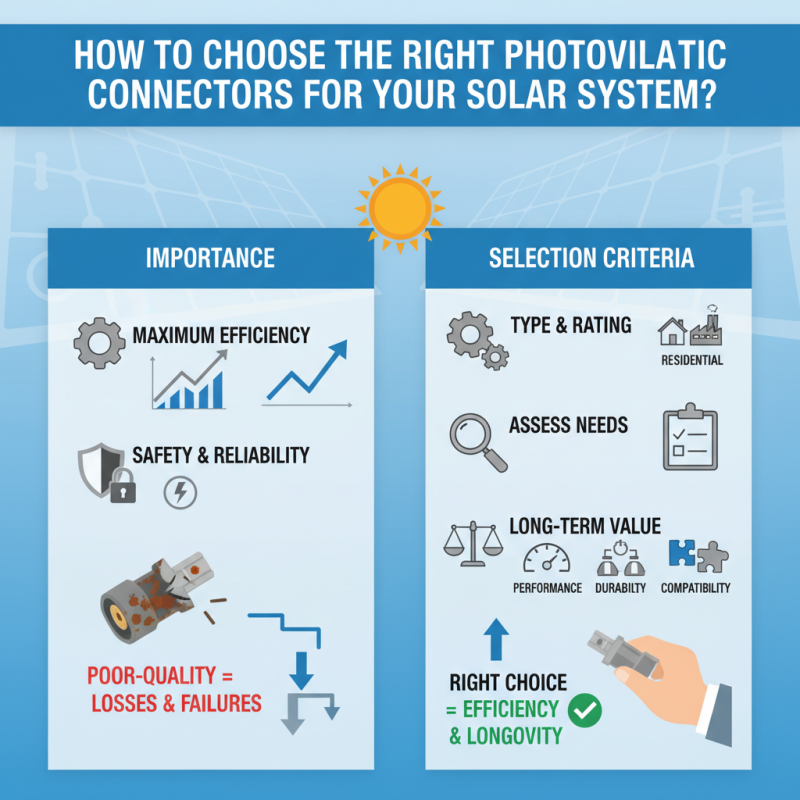
When designing a solar system, choosing the right Photovoltaic connectors is crucial. These small yet significant components play a vital role in ensuring maximum efficiency and safety. The right connectors guarantee reliable electrical connections and weather resistance. Selecting poor-quality connectors can lead to energy losses and system failures.
Photovoltaic connectors come in various types and ratings. Each type serves different functions and environments. For instance, connectors used in residential systems may differ from those employed in commercial setups. Understanding your specific needs is essential.
Additionally, the market offers many options, which can be overwhelming. Often, consumers may choose based on price alone. This approach can lead to future challenges. It’s vital to consider the long-term impact of your choice. Assessing performance, durability, and compatibility is important before making a decision. The right choice affects not only efficiency but also overall system longevity.
Understanding Photovoltaic Connectors and Their Importance in Solar Systems
Photovoltaic connectors play a crucial role in solar systems. They ensure a reliable connection between solar panels and other components. A robust connection can enhance energy efficiency and overall system performance. According to a report by the International Renewable Energy Agency, approximately 10% of energy loss in solar systems is due to poor connections.
Choosing the right connector is essential. Consider factors like voltage rating, temperature range, and environmental durability. For instance, connectors rated for a higher voltage can handle more expansive solar installations effectively. The Solar Energy Industries Association states that proper connectors can improve system longevity by up to 30%.
However, not all connectors are created equal. Inadequate quality can lead to overheating or corrosion. Regular maintenance is necessary; users must check connections for wear and tear. Neglecting this can result in significant energy losses. Evaluating options critically is essential for optimal performance. Remember, the right connector contributes significantly to the success of your solar setup.
Types of Photovoltaic Connectors: An Overview of Common Options
Selecting the right photovoltaic connectors is crucial for your solar system's efficiency and safety. Various options are available, each catering to specific needs. MC4 connectors are among the most popular choices. They provide a reliable connection and are weather-resistant. However, improper installation can lead to performance issues, which can be frustrating.
Another option is the Tyco connectors. These connectors are known for their ease of use and secure fit. They can withstand harsh conditions, making them suitable for outdoor use. Yet, they might not be as compatible with all solar panels. Compatibility is key. Using the wrong connectors may result in energy loss or even system failure.
Lastly, solar plug connectors offer simplicity and flexibility. They are often used for smaller solar projects. Their design allows for quick connections and disconnections. However, their durability often falls short compared to other options. It's essential to evaluate your project's requirements thoroughly. Overlooking details can lead to costly mistakes. Consider factors such as voltage ratings, compatibility, and environmental conditions to make a more informed decision.
Factors to Consider When Selecting Photovoltaic Connectors for Efficiency
When selecting photovoltaic connectors for your solar system, efficiency is crucial. Proper connectors ensure optimal energy transfer and system performance. The right choice directly impacts the energy yield of the entire installation. Look for connectors designed to handle various temperatures and weather conditions. These features enhance durability and longevity.
Consider the current and voltage ratings of the connectors. They must match your system’s specifications. Mismatches can lead to overheating and power loss, making your system inefficient. Check the materials used in the connectors as well. High-quality materials resist corrosion and wear, which is vital for long-term reliability.
Don’t forget about compatibility. Many connectors may physically fit but do not connect electrically well, which can waste energy. Test the connectors before full installation; this step can prevent future problems. The right choices may require time and research, but they are essential for achieving efficiency in your solar system.
Compatibility and Standards: Ensuring Proper Fit for Your Solar Components
When setting up your solar system, choosing the right photovoltaic connectors is crucial. Compatibility is often overlooked. Each component in a solar setup, like panels and inverters, has specific requirements. Mismatched connectors can lead to increased resistance and decreased efficiency. It is important to refer to the specifications before making a choice.
Standards play a vital role in ensuring that connectors work well together. Different regions have varying standards, which can add confusion. You may find that some connectors look similar but are not interchangeable. It’s essential to double-check that your selected connectors adhere to appropriate ratings and certifications. This oversight can cost you time and money in potential system failures.
Many users underestimate the importance of proper fit. Using connectors that do not match can lead to loose connections. This could cause overheating or even fire hazards. Investing extra effort in compatibility can save significant headaches later. Don’t rush through this process; take your time to research. Quality connectors, though slightly more costly, often prove worthwhile in the long run.
Maintenance and Safety Tips for Photovoltaic Connectors in Solar Installations
When it comes to photovoltaic connectors, maintenance and safety are paramount. Regular inspections are crucial. According to a 2022 industry report, improper connections can lead to a 20% decrease in energy efficiency. Over time, connectors can suffer from wear and tear due to weather exposure. Corrosion is a common issue that impacts performance.
Tip: Keep connectors clean and dry. Inspect them at least twice a year. Look for signs of wear, like discoloration or physical damage.
It's essential to follow manufacturer guidelines for installation. A report by the Solar Energy Industries Association indicates that up to 30% of solar system failures are linked to poor connector choices or maintenance practices. Document any issues you find during inspections. This practice helps track performance and safety concerns over time.
Tip: Use heat shrink tubing for better protection. It adds an extra layer against moisture and dust. Make sure connections are tight, but avoid over-tightening, which can cause damage.
Safety should always come first. Use appropriate personal protective equipment during maintenance. If you notice significant issues, consult a professional. Remember that even small problems can lead to larger, more costly failures in your solar setup.