How to Choose the Right Miniature Circuit Breaker for Your Home?
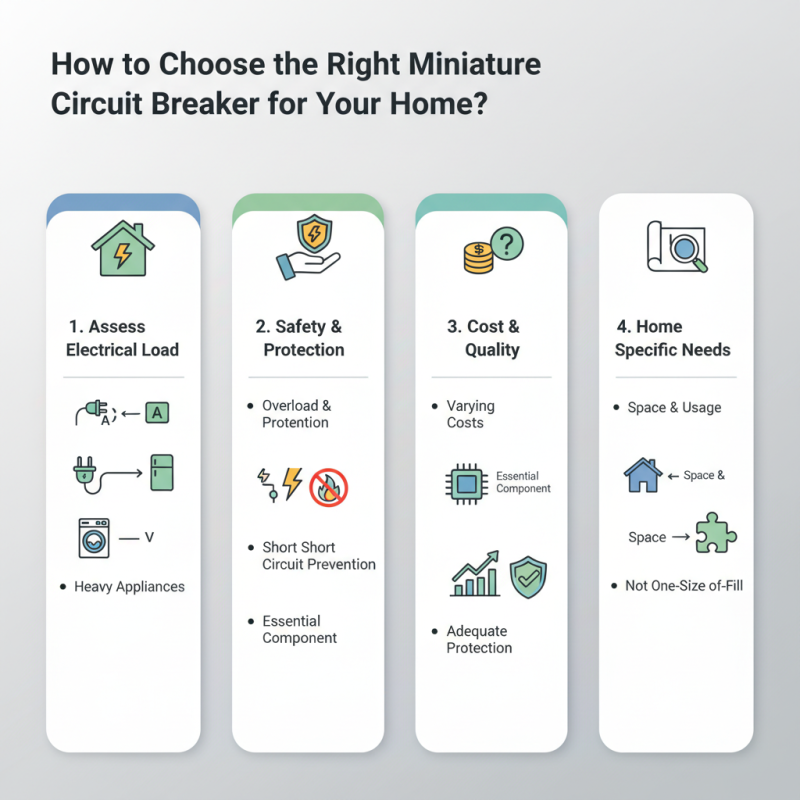
Choosing the right Miniature Circuit Breaker (MCB) for your home is essential for safety. An MCB is a key component in your electrical system. It protects circuits from overloads and short circuits, preventing potential hazards.
Consider your home’s electrical load. Knowing the rated current and voltage is crucial. Space and planned usage affect your choice, too. For example, if you have heavy appliances, you may need a higher-rated MCB.
Costs can vary widely. Sometimes, cheaper options might not provide adequate protection. This requires careful consideration. Also, not all homes are the same. Reflect on your specific needs and limitations. Choosing a Miniature Circuit Breaker is not a one-size-fits-all solution.
Understanding Miniature Circuit Breakers and Their Purpose
Miniature circuit breakers (MCBs) protect electrical circuits from overloads and short circuits. They act as a safety mechanism, preventing potential fires and equipment damage. Understanding how MCBs function is key. When current exceeds a specific limit, the MCB automatically disconnects the circuit. This quick response is vital for home safety.
Choosing the right MCB depends on several factors. Consider the load type, typical usage, and circuit characteristics. A household might have varying appliances, each requiring different protection levels. Voltage ratings and breaking capacities are crucial. These aspects ensure the breaker can handle possible faults. It’s common to overlook specifications, which can lead to inadequate protection.
Installation might pose challenges too. Misconnecting an MCB could create risks. Seek professional guidance if unsure. Proper placement in your distribution board is essential for accessibility during emergencies. Reflecting on these details ensures a reliable electrical system. Ignoring them may result in mistakes that compromise safety.
How to Choose the Right Miniature Circuit Breaker for Your Home?
| Breaker Type | Current Rating (A) | Voltage Rating (V) | Tripping Characteristics | Applications |
| Type B | 6 - 32 | 230/400 | Slow, for general applications | Lighting, sockets |
| Type C | 10 - 63 | 230/400 | Medium, for commercial applications | Kitchens, power tools |
| Type D | 10 - 125 | 230/400 | High, for industrial applications | Motors, transformers |
| Type K | 6 - 25 | 230/400 | Specialized for specific loads | Heating systems |
| Type S | 6 - 32 | 230/400 | Selectivity, for cascading systems | Lighting circuits |
Assessing the Electrical Needs of Your Home
Assessing the electrical needs of your home is crucial when selecting a miniature circuit breaker (MCB). Start by evaluating the total load in your home. According to the National Electrical Code (NEC), the average home requires about 3,000 to 5,000 watts of electricity per circuit. This means that understanding your appliances and their wattage is essential. An energy-efficient home might need fewer circuits, while a larger home with many devices will require more.
Next, consider the types of devices and their usage. High-power appliances like refrigerators and water heaters need dedicated circuits. A study from the U.S. Energy Information Administration indicates that around 30% of household electricity consumption comes from heating and cooling systems. Ensuring that your breaker can handle the load is vital to prevent tripping and to guarantee safety.
Finally, take into account any future electrical needs. As technology evolves, so do our energy requirements. Smart home devices and electric vehicles are gaining popularity, which might necessitate upgrading your circuit breakers. Reflect on your current consumption patterns and plan wisely. Failing to do so could lead to inadequacy in meeting your home's electrical needs.
Evaluating Different Types of Miniature Circuit Breakers
When selecting a miniature circuit breaker (MCB) for your home, it’s essential to understand the different types available. MCBs serve as a critical safety component in electrical systems. They protect against overloads and short circuits. Generally, MCBs are categorized into types based on their tripping characteristics. Type B MCBs are ideal for residential use. They trip between 3 to 5 times the rated current. This makes them suitable for general lighting and socket circuits.
Type C MCBs, on the other hand, are designed for moderate inrush currents. They trip between 5 to 10 times the rated current, making them suitable for appliances like motors. Choosing the right type can be confusing. You might find yourself leaning toward a specific type without fully understanding its application. It's important to evaluate your household’s specific electrical needs. Consider the devices you use most often. Are they heavy-load appliances or simple lighting fixtures? This reflection helps to ensure safety while maximizing efficiency.
Key Features to Consider When Choosing a Circuit Breaker
Choosing the right miniature circuit breaker (MCB) is crucial for home safety. One key feature to consider is the current rating. This rating determines how much current the MCB can handle before tripping. A common mistake is to select an MCB without assessing the total load of your home. Calculating the total amperage of your appliances is vital. This will help prevent overload.
Another important aspect is the tripping characteristics. MCBs come with different curves (B, C, D) that respond to surges in current differently. If you have sensitive electronics, you might need a type B breaker. Type C or D breakers can handle higher inrush currents, suited for motors or inductive loads. Not matching the right type could lead to nuisance trips.
Installation considerations are equally essential. Ensure that the MCB fits your installation environment. For example, consider temperature range and humidity. A few homeowners overlook this and face issues later. It’s wise to double-check compatibility with your existing distribution board. Plan ahead and avoid hasty decisions.
Tips: Always consult with a qualified electrician. This can save you from costly mistakes. Regular maintenance and checks help keep your MCB functioning at its best. Proper selection and care of your MCB contribute greatly to home safety.
Tips for Installation and Maintenance of Circuit Breakers
Installing miniature circuit breakers (MCBs) in your home can be straightforward, but maintenance is key. Regular checks are essential. Inspect each MCB for signs of wear. Look for scorch marks or unusual sounds. These could indicate underlying issues. Remember, a faulty breaker can lead to bigger problems like electrical fires.
Routine testing is another crucial step. Press the test button on the MCB to ensure it trips correctly. If it doesn't, you may need to replace it. Don’t ignore frayed wires or loose connections either; they can cause circuit failures. Document any changes or repairs you've made. This helps track the condition of your electrical system.
Professional help is always an option if you’re unsure. Some prefer a DIY approach, but caution is vital. Electrical work can be dangerous. If you're hesitant, refer to a professional. Reflect on your own skills and comfort level when handling circuits. It's okay to ask for help when needed.