2026 How to Choose the Right DC Isolation Switch?
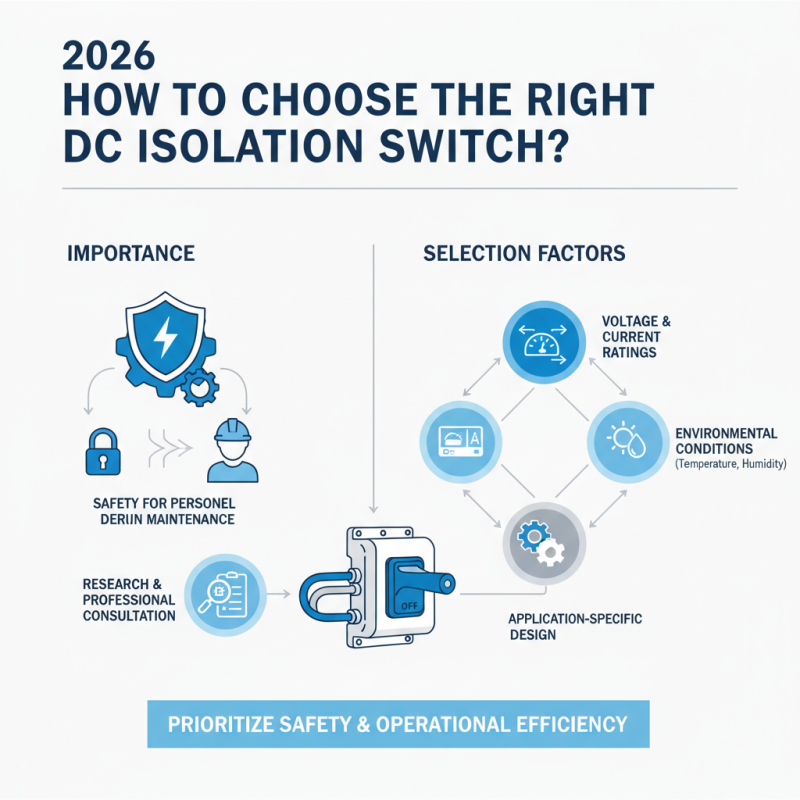
Choosing the right DC Isolation Switch is crucial for ensuring safety and efficiency in electrical systems. A DC Isolation Switch plays a vital role in isolating circuits during maintenance or in case of faults. This switch prevents accidental energization and enhances the safety of personnel working on the equipment.
When selecting a DC Isolation Switch, several factors must be considered. One must evaluate the voltage and current ratings, ensuring compatibility with the system. Additionally, the environmental conditions where the switch will be installed, such as temperature and humidity, can significantly affect performance. It is important to reflect on whether the switch is designed for specific applications, as this can influence its longevity and reliability.
However, the decision-making process can be overwhelming. There are numerous options available in the market, each claiming to be the best choice. One might feel unsure about the ideal fit for their unique requirements. Engaging in thorough research and consulting with professionals can help in navigating these challenges effectively. Selecting the right DC Isolation Switch is not merely a technical task; it is also about making informed choices that prioritize safety and operational efficiency.
Understanding the Functionality of DC Isolation Switches in Electrical Systems
DC isolation switches play a vital role in electrical systems. They ensure safety by disconnecting parts of the circuit. This function is crucial for maintenance and fault management. A report from the International Energy Agency noted that DC isolation switches reduce risks during solar energy maintenance by about 30%. The choice of a switch impacts system reliability.
When selecting a DC isolation switch, consider several factors. Voltage rating is key. Ensure the switch can handle the maximum voltage of your system. Additionally, the current rating must align with your application. Regular inspection is necessary. Wear and tear happen over time, potentially compromising safety.
Tip: Look for switches that offer clear visual indicators for their status. This feature can prevent unexpected power reconnections.
Some switches may not meet all operational standards. An outdated switch can pose risks. Stay updated on the latest standards and innovations. This ensures your systems are safe and efficient.
Tip: Regularly consult industry reports to stay aware of new technologies. Staying informed helps improve your switch selection process.
Key Technical Specifications for Selecting a DC Isolation Switch
When selecting a DC isolation switch, examining the key technical specifications is essential. Begin with the voltage rating. Ensure it matches your system’s requirements. Wrong ratings can lead to failures or hazards. Next, consider the current rating. Overloading can damage the switch. Make sure the switch can handle your application’s continuous load.
Another critical specification is the breaking capacity. This indicates how much fault current the switch can manage. A switch with low breaking capacity might not protect your system effectively. Additionally, the switch's insulation resistance is significant. High insulation resistance reduces the risk of electrical leakage.
Take note of the design features. Look for easy operation and maintenance access. Some switches may not offer straightforward access, making maintenance cumbersome. Reflect on the environment where the switch will be installed. Harsh conditions can affect the switch’s longevity. Ensure the switch is suitable for the specific environmental factors your system faces.
Assessing the Environmental Factors Affecting DC Isolation Switch Performance
When selecting a DC isolation switch, environmental factors play a crucial role in its performance. Conditions like temperature, humidity, and dust can significantly affect switch functionality. For instance, high humidity may lead to corrosion, while dust accumulation can hinder operation. Understanding the local climate is essential.
Tip: Always evaluate the installation location. Is it prone to extreme temperatures? Consider how that may impact the switch's lifespan. You may want a switch rated for wider temperature ranges if needed.
Further, vibration and shock can impact a switch’s reliability. This is particularly true in industrial settings. Heavy machinery can create unstable conditions. Choose a switch designed to withstand these physical stresses.
Tip: Investigate the materials used in the switch. Tougher materials can resist vibrations better. Look for specifications detailing performance under harsh conditions.
Also, consider the electrical environment. Electromagnetic interference can disrupt functionality. Properly shielded switches may be necessary in high-EMI areas. It's crucial to gauge all these elements before making a choice. Remember, real-world conditions can differ from specifications.
Industry Standards and Certifications for DC Isolation Switches
Choosing the right DC isolation switch requires understanding industry standards and certifications. These guidelines help ensure reliability and safety in various applications. Look for switches that meet IEC and UL certifications. Knowing these can guide your decision-making process effectively.
When assessing DC isolation switches, consider their environmental compatibility. They should withstand temperature fluctuations and humidity. Look for IP ratings that provide excellent protection against dust and water ingress. A high rating can indicate a robust product.
Tips: Always verify the certification labels. It's vital to ensure compliance with relevant standards. Regular revisiting of your choices can reveal gaps. Don't settle for the first option; explore more. Sometimes, a detailed investigation can lead to better options that suit your needs perfectly. Keep an open mind for future updates in standards to stay compliant.
Emerging Technologies in DC Isolation Switch Design and Their Impact
The design of DC isolation switches is evolving rapidly. Emerging technologies are reshaping performance, efficiency, and safety. Recent industry reports indicate a projected annual growth rate of 7.5% in the market for DC isolation switches by 2026. This growth is driven by advancements in materials and designs that cater to renewable energy applications.
Innovative designs focus on higher voltage ratings and improved arc-extinguishing capabilities. Manufacturers are exploring new materials such as advanced polymers, which provide better insulation and durability. However, these advancements are not without challenges. Some prototypes have faced reliability issues under extreme temperatures, prompting further research. It’s crucial to learn from these setbacks to refine product designs.
Smart technology integration is becoming more common. Devices are now equipped with digital monitoring systems. These systems enhance fault detection and improve maintenance schedules. Data from installations show a 30% reduction in maintenance costs among smart switch users. Still, the accessibility of such technologies is a concern. Many smaller companies struggle to adopt these innovations due to budget constraints. Addressing these challenges is essential for the industry’s growth and sustainability.