
Blog

How to Choose the Right Square Tube for Global Sourcing?

When purchasing steel for international projects, choosing the right Square Tube is rarely a simple size decision. A 50 x 50 millimeter profile may look identical across suppliers. Its wall thickness, corner radius, steel grade, and straightness can differ significantly. These differences affect welding, load performance, corrosion resistance, and installation time. Experienced buyers examine the application before comparing prices. A low quotation can become expensive after rework, delays, or failed inspections. Good sourcing begins with a clear technical question. What must this tube withstand?

This guide explains the practical factors behind a dependable sourcing decision. Buyers should define dimensions, tolerance, surface finish, length, and required steel standards. They should also confirm whether the Square Tube is hot-formed, cold-formed, galvanized, or painted. Mill test certificates provide useful evidence, but documents alone cannot prove production consistency. Reviewing samples, factory photos, inspection records, and packaging methods adds valuable context. A reliable supplier should explain manufacturing limits clearly, not simply promise every specification. That matters during cross-border communication.

Small details often reveal larger risks. Uneven bundles may indicate weak handling controls. Unprotected ends can suffer dents during ocean transport. Moisture trapped inside wrapped tubes may create early rust. These problems are easy to underestimate. I have seen technically correct orders become difficult because packaging requirements were discussed too late. No checklist is perfect. Specifications can still miss real site conditions, especially when drawings change. Buyers should keep room for verification, independent inspection, and honest technical discussion. The best choice balances performance, compliance, delivery reliability, and total cost rather than selecting the cheapest Square Tube available.
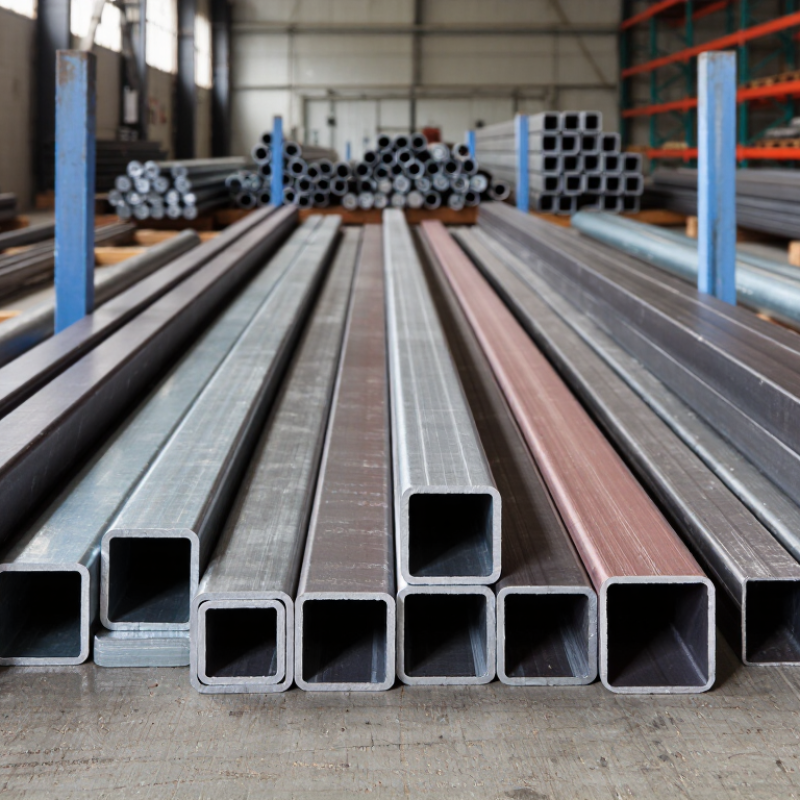
How to Choose the Right Square Tube for Global Sourcing?

Define the Required Square Tube Application and Performance

Before choosing a square tube for global sourcing, define its exact job. A tube for a warehouse frame faces different demands than one used in furniture or machine guarding. Record the expected load, span, support method, and service temperature. Note whether the tube will be welded, bolted, painted, or left exposed. Small details matter.

For outdoor structures, review corrosion exposure, drainage, coating needs, and local humidity. For machinery, check dimensional accuracy, vibration, impact, and fatigue resistance. Wall thickness should match the load without creating unnecessary weight or transport cost. Confirm the steel grade, yield strength, tensile strength, and elongation through reliable test certificates. Ask for dimensional tolerances, corner radius, straightness, and surface condition.

Do not select by size alone.

A 40 × 40 mm tube can perform poorly if its wall is too thin or its corners are inconsistent. I have seen purchasing teams approve samples before testing weld behavior, then face cracking during production. That assumption can fail. Request production samples and inspect them under realistic conditions. Measure several points, not just one clean section. If the tube will be cut and joined locally, confirm compatible welding procedures and available equipment. Standards differ across markets, so compare the required specification with the destination project documents. A cheaper tube may create more rework, rejected assemblies, or delayed installation. Recheck the application when design conditions change.

Select the Appropriate Material, Grade, and Surface Finish

Choosing the right square tube begins with service conditions, not catalog dimensions. Carbon steel suits most structural frames and offers efficient welding. For lighter corrosion exposure, Grade B under ASTM A500 may be adequate. Higher strength or impact requirements can justify Grade C or EN 10219 S355J2H. Confirm yield strength, wall thickness, corner radius, and weldability before ordering. A certificate alone is not enough. Check the heat number against the tube bundle and request independent dimensional inspection.

Material selection also affects environmental performance. The World Steel Association reported approximately 1.89 billion tonnes of crude steel production in 2023. This large supply base creates sourcing options, but quality can vary between mills. The International Energy Agency estimates steelmaking produces around 7–9% of global energy-related emissions. Recycled content, electric-furnace production, and transport distance therefore deserve attention. They may increase the purchase price slightly. They can reduce project risk and embodied emissions.

Finish is not decoration. Choose mill finish for dry indoor applications and hot-dip galvanizing where moisture, salt, or outdoor exposure is expected. ISO 1461 provides coating requirements for galvanized steel, including coating thickness by material thickness. Powder coating can add color and a clean appearance, but damaged edges still need protection. For severe chemical or marine conditions, consider stainless grades such as 1.4301 or 1.4404, then verify chloride resistance carefully. I have seen attractive finishes fail because cut ends were left unsealed. Specify preparation, coating thickness, adhesion testing, packaging, and repair methods in the purchase document. Surface appearance should never replace corrosion testing.

How to Choose the Right Square Tube for Global Sourcing? - Select the Appropriate Material, Grade, and Surface Finish

Comparison guide for selecting square hollow sections according to structural performance, corrosion exposure, fabrication requirements, applicable standards, and international purchasing controls.

Material Category Common International Grade Typical Minimum Yield Strength Recommended Environment or Application Suitable Surface Finish Relevant Standard or Reference Key Sourcing Checks
Carbon Steel ASTM A500 Grade B 315 MPa minimum for the specified grade General structural frames, machinery supports, racks, agricultural equipment, and indoor construction. Black mill finish, painted finish, powder coating, or hot-dip galvanizing after fabrication. ASTM A500/A500M for cold-formed welded or seamless carbon steel structural tubing. Confirm outside dimensions, wall thickness, corner radius, straightness, weld condition, heat number, and material test certificate.
Carbon Steel ASTM A500 Grade C 345 MPa minimum for the specified grade Load-bearing structures requiring higher specified strength than Grade B, including frames and structural supports. Black mill finish for protected interiors; galvanizing or a duplex coating system for outdoor service. ASTM A500/A500M; confirm the product is supplied as structural tubing rather than general-purpose mechanical tubing. Check design calculations, impact requirements if applicable, weld seam quality, dimensional tolerance, and traceability documentation.
Carbon Steel EN 10219 S235JRH 235 MPa minimum for nominal thickness up to 16 mm Light to medium structural fabrication, building components, frames, and general welded assemblies. Untreated, shop-primed, painted, or hot-dip galvanized. EN 10219-1 and EN 10219-2 for cold-formed welded structural hollow sections. Verify impact designation “JR,” delivery condition, weldability, EN dimensional tolerances, and inspection certificate type.
Carbon Steel EN 10219 S355J2H 355 MPa minimum for nominal thickness up to 16 mm Heavier structural frames, lifting-support structures, platforms, and applications requiring increased yield strength. Paint system, powder coating, or hot-dip galvanizing selected according to atmospheric exposure. EN 10219-1 and EN 10219-2; “J2” indicates a 27 J impact requirement at -20°C for the relevant product condition. Confirm impact-test results, thickness range, welding procedure, notch toughness requirements, and applicable design code.
Weathering Steel EN 10025-5 S355J2W 355 MPa minimum for nominal thickness up to 16 mm Exterior structures where a controlled protective patina is acceptable and drainage prevents persistent water retention. Unpainted weathering surface; alternatively, a compatible coating system where appearance or moisture conditions require it. EN 10025-5 for structural steels with improved atmospheric corrosion resistance. Do not use in continuously wet, marine-salt, poorly ventilated, or sheltered water-trap locations without an engineered protection system.
Stainless Steel EN 1.4301 / 304 Typically about 190 MPa minimum proof strength for common annealed sheet and tube products; verify the product standard. Food-processing areas, architectural components, indoor wet environments, and moderately corrosive applications. Mill finish, pickled and passivated, brushed, or polished according to appearance and cleaning requirements. EN 10088 material designation; tube-specific requirements should be confirmed against the applicable stainless tube standard. Check corrosion environment, weld discoloration treatment, surface roughness, passivation records, and ferrite or PMI requirements when specified.
Stainless Steel EN 1.4404 / 316L Typically about 170 MPa minimum proof strength for common annealed products; verify the product standard. Coastal atmospheres, chemical-processing areas, de-icing salt exposure, and applications needing improved resistance to chlorides. Pickled and passivated, brushed, or polished; avoid contaminating the surface with carbon-steel tools or particles. EN 10088 material designation; confirm the applicable hollow-section or welded-tube product specification. Confirm molybdenum-bearing grade, low-carbon “L” designation, weld-cleaning process, surface condition, and chloride exposure limits.
Galvanized Carbon Steel Steel + Zinc Coating Determined by the selected base-steel grade; the zinc layer does not replace the structural grade. Outdoor structures, fencing, agricultural equipment, cable supports, and general atmospheric corrosion protection. Hot-dip galvanized after fabrication; electro-galvanized coating may be used for lighter-duty or appearance-focused applications. ISO 1461 for hot-dip galvanized coatings on fabricated iron and steel articles; confirm regional requirements. Specify whether galvanizing is before or after forming, coating thickness or mass, vent and drain holes, repair method, and visual acceptance criteria.
Aluminum Alloy EN AW-6060 or 6063 Varies significantly by temper; common architectural tempers are lower-strength than structural steel. Lightweight frames, architectural systems, transport components, and applications where corrosion resistance and low mass are important. Mill finish, anodized finish, powder coating, or painted finish. EN 755 and EN 12020 for relevant aluminum extruded products; confirm the hollow-section dimensional standard. Specify alloy, temper, extrusion profile, dimensional tolerance, weldability, thermal expansion allowance, and galvanic-isolation requirements.
Important specification note: Mechanical properties, tolerances, coating thickness, and test requirements depend on the exact product standard, wall thickness, manufacturing process, delivery condition, and applicable design code. Before ordering, request dimensional inspection records, a material test certificate, surface-finish requirements, packaging details, and an agreed inspection plan.

Determine the Correct Dimensions, Wall Thickness, and Tolerances

Choosing the right square tube begins with accurate dimensions, not appearance. Specify outside width, height, and length in millimeters. A tube listed as 50 × 50 mm may not meet your needs if the actual wall thickness reduces the internal opening. Check whether your design requires precise internal clearance for cables, fittings, or sliding parts.

Wall thickness affects strength, weight, welding, and cost. A thicker wall can resist bending, but it may add unnecessary material and shipping weight. For load-bearing applications, calculate expected forces and ask a qualified engineer to review the design. Do not rely only on a supplier’s standard table. Confirm the steel grade, manufacturing process, straightness, corner radius, and cut-length tolerance. Small differences can complicate assembly.

Tips: Request a dimensional inspection report with each production batch. Define acceptable tolerances before placing an order, including outside dimensions, wall thickness, length, squareness, and twist. Samples should be measured with calibrated tools. One oversight is easy to miss: the stated tolerance may apply to the tube body, but not to saw-cut ends. I have seen drawings that looked complete yet left this point unclear. Clarify inspection methods, packaging, and moisture protection for long-distance transport. A practical specification is usually more reliable than a long specification filled with vague terms.

Evaluate Global Supplier Capabilities, Standards, and Certifications

Choosing square tube for global sourcing starts with the supplier, not the lowest quotation. Ask how the mill controls outside dimensions, wall thickness, corner radius, straightness, and weld quality. Request recent inspection records, not only a polished sample. A useful file includes heat numbers, chemical results, tensile data, dimensional readings, and coating thickness. Keep it traceable. Confirm whether the same process applies to production batches. Some suppliers show excellent samples but weak batch control. That risk deserves attention.

Match the tube to the destination market and application. Clarify whether testing follows ASTM, EN, JIS, or another specified standard. Do not accept “international standard” as a complete answer. Check the certificate number, issuing body, expiry date, and covered production site. ISO 9001 can indicate a managed quality system, but it does not guarantee every tube is compliant. Mill test certificates should match the heat number on packing or labels. Independent pre-shipment inspection can verify dimensions, quantity, surface condition, and packaging. It adds cost. It may prevent a costly rejection.

Supplier capability also includes production flexibility. Ask about minimum order quantities, tooling, custom lengths, galvanizing, bundling, and replacement procedures. Review loading photos and packaging details, especially for long tubes vulnerable to bending and moisture. Test communication with a small technical question. Clear drawings, prompt revisions, and consistent records are practical evidence. I would still leave room for doubt. A passed audit captures one moment, not every future shipment. Require a signed specification, approved sample, inspection plan, and corrective-action process before scaling the order.

How to Choose the Right Square Tube for Global Sourcing?

Evaluate global supplier capabilities, applicable standards, and certifications before comparing price and lead time.

The chart compares the minimum specified yield strength of representative structural square hollow-section grades. Values can vary by wall thickness and product condition, so suppliers should provide current mill test certificates, dimensional inspection records, traceability documentation, and evidence of compliance with the required standard. Reference standards include EN 10219-1, ASTM A500/A500M, JIS G 3466, and GB/T 6725.

Compare Costs, Logistics, Quality Control, and Import Requirements

Choosing the right square tube for global sourcing requires more than comparing unit prices. Confirm the outside dimensions, wall thickness, steel grade, length tolerance, and surface finish. Ask whether the quotation includes packing, inspection, inland transport, duties, and port charges. A low factory price can become expensive after customs clearance and delivery.

Logistics also affects the final cost. Check how tubes are bundled, protected from moisture, and loaded into containers. Poor packing may cause bent corners, rust marks, or wasted space. For quality control, request mill test certificates and agree on measurable acceptance standards. A pre-shipment inspection should verify dimensions, wall thickness, weld quality, and quantity. In practice, buyers sometimes trust photographs too much. That is a mistake I have made before.

Tips: Build a landed-cost comparison for each supplier. Include freight, insurance, taxes, handling, and possible storage fees. Request samples before mass production. Use a calibrated gauge during inspection. Confirm the correct HS classification with a qualified customs professional. Prepare the commercial invoice, packing list, origin documents, and material test reports. Import marking, duties, and steel-related measures can vary by destination, so verify current requirements before shipment. Ask suppliers to state the Incoterm clearly. Do not approve a quote with unclear delivery responsibility.

Article Source:

Go to Top