Discover the Best Precision Engineered Counterweights in China?
When exploring the industrial landscape of China, Precision Engineered Counterweights stand out as crucial components for various applications. These counterweights are designed to enhance stability in machinery, ensuring safety and efficiency. With a rich history of engineering expertise, China has emerged as a leader in manufacturing high-quality counterweights.
The demand for precision engineered counterweights is driven by diverse industries, from construction to manufacturing. Choosing the right counterweight is essential for performance. However, not all products on the market meet the necessary standards. Some options may lack the precision required, leading to unforeseen challenges. Thus, understanding what constitutes a quality counterweight is vital.
In this quest, it is important to identify manufacturers with a solid reputation. Reliability and expertise are key indicators of quality. As industries continue to evolve, the need for well-engineered counterweights will only grow. Recognizing the right features and specifications will ultimately guide buyers toward better choices.
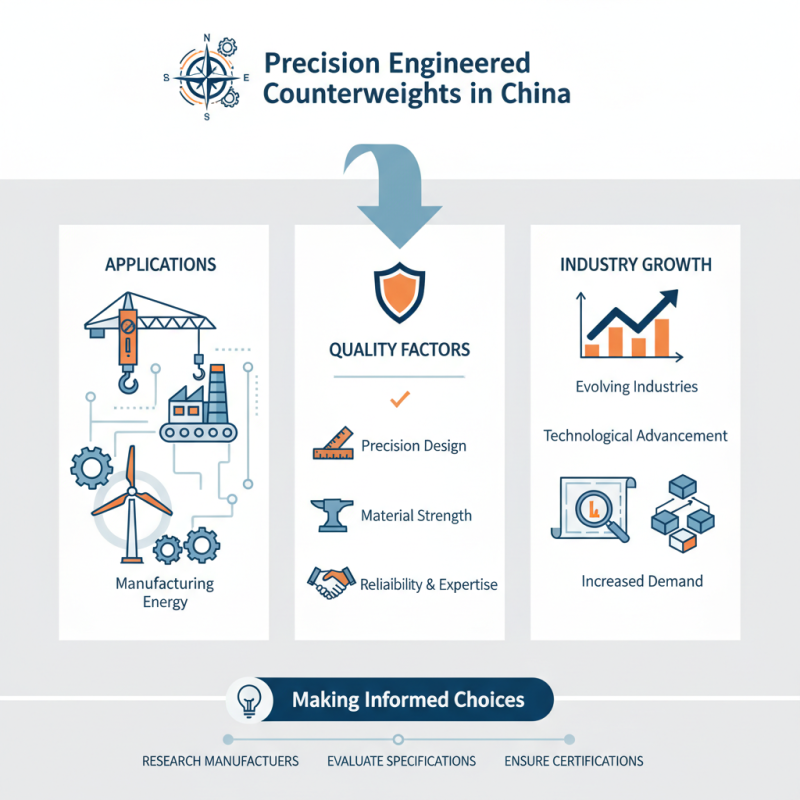
Key Features of Precision Engineered Counterweights
Precision engineered counterweights play a crucial role in various industries. They ensure stability and balance in machinery, such as cranes and elevators. The best ones are crafted using high-quality materials, providing durability and efficiency.
When selecting counterweights, consider the weight distribution requirements of your machinery. Different machines have specific needs based on their operating conditions. A well-balanced load improves performance and safety. Remember, crafting a perfect counterweight is complex. There is often a delicate balance between weight and space, which requires careful calculations.
Tips: Always verify the material specifications before purchase. Look for counterweights tested under different conditions to ensure reliability. Don't overlook the importance of custom solutions. Sometimes standard options might not meet your specific needs. Finding a manufacturer with experience can make a big difference in the long run. Aim for collaboration rather than one-size-fits-all solutions. Embrace the learning curve in this process, as it can lead to superior results.
Top Manufacturers of Counterweights in China
In recent years, the demand for precision engineered counterweights has surged in various industries in China. This growth stems from a need for enhanced safety and efficiency in machinery operations. According to a recent market report, the counterweight industry in China is projected to expand at a compound annual growth rate (CAGR) of 5.4% until 2028. This statistic reflects a strong trend towards automation and improved engineering standards.
Several manufacturers have emerged as leaders in the counterweight segment. These companies focus on high-quality materials and precise design to ensure performance. For instance, the use of advanced materials like carbon steel and cast iron has become commonplace. This allows for lighter yet more durable counterweights that contribute to machine stability. However, the challenge remains in balancing cost and quality, as some manufacturers may compromise on design efficiency to reduce production costs.
Additionally, with the ongoing pressures of sustainability, there are calls for more eco-friendly practices in the production process. Many manufacturers are exploring the use of recyclable materials and energy-efficient methods. This shift is critical as 64% of industry stakeholders recognize the environmental impact of their operations. The challenge lies in integrating these sustainable practices while maintaining production capacity and profitability.
Materials Used in Precision Counterweights and Their Benefits
When selecting precision engineered counterweights, the materials used play a vital role. Commonly employed materials include steel, cast iron, and concrete. Each material has its distinct properties that affect performance. For example, steel offers high tensile strength and durability. It can withstand heavy loads and harsh environments. On the other hand, cast iron provides excellent stability and damping qualities. Its density helps to minimize vibrations in machinery.
Concrete is another popular material due to its versatility and affordability. It can be molded into various shapes and sizes. However, it lacks some strength compared to metals, which may not suit all applications. While these materials offer unique benefits, they each have limitations. Steel can corrode if not treated properly. Cast iron, while strong, can be brittle under certain conditions. Understanding these nuances is crucial for making informed decisions. Selecting the right counterweight material can substantially affect equipment performance and operational efficiency.
Discover the Best Precision Engineered Counterweights in China
This chart displays the weights of various materials used in precision engineered counterweights in China. Each material has its unique benefits, contributing to different applications in engineering and manufacturing.
Applications of Precision Counterweights in Various Industries
Precision counterweights play a vital role in various industries. They enhance stability and performance across multiple applications. In construction, these counterweights provide balance for cranes and excavators. Ensuring proper weight distribution is crucial for safety and efficiency. In the aerospace sector, precision-engineered counterweights are used in aircraft control surfaces. They help maintain equilibrium, allowing for smooth navigation.
In manufacturing, counterweights support lift systems and conveyors. They ensure that operations run smoothly. If improperly designed, they can lead to system failures. In automotive applications, counterweights are essential for reducing vibrations, improving ride quality. The specific weight and placement of these components can make a difference in performance.
Though the technology behind precision counterweights is advanced, it is not without challenges. Manufacturers must constantly adapt to changing requirements. This can lead to design flaws or material failures if not managed well. Investing time in testing and evaluation is critical. Understanding the unique needs of each application can greatly impact the effectiveness of counterweights.
Discover the Best Precision Engineered Counterweights in China
| Industry | Application | Material | Weight Range (kg) | Precision Level (mm) |
| Construction | Excavators | Steel | 200 - 500 | ±0.1 |
| Aerospace | Aircraft Balancing | Aluminum | 50 - 150 | ±0.05 |
| Manufacturing | CNC Machines | Iron | 100 - 300 | ±0.2 |
| Automotive | Engine Balancing | Cast Iron | 25 - 75 | ±0.1 |
| Entertainment | Stage Equipment | Lead | 10 - 30 | ±0.3 |
Quality Standards and Testing for Counterweights in Manufacturing
In the manufacturing of counterweights, quality standards are paramount. These standards ensure that each counterweight performs reliably in its designated application. China has rapidly advanced in this field, setting benchmarks for quality that align with global expectations. Rigorous testing not only measures the physical properties of the materials but also evaluates how they perform under stress. This process typically includes tensile testing, fatigue testing, and impact testing, all critical to ensure safety and durability.
While many manufacturers strive for excellence, not all meet the same criteria. Lack of proper testing can lead to failures in real-world applications. Some manufacturers may cut corners, compromising material integrity or ignoring safety regulations. This creates a reliance on trust, which can be shaky. Buyers must be vigilant, ensuring they seek out companies with transparent practices and proven testing protocols. Engaging with trusted sources can help navigate the complexities of quality assurance in counterweight production.