
Choosing the best China supplier for Welding 304 Stainless Steel requires more than comparing prices. The right partner should demonstrate consistent material quality, controlled fabrication, and clear technical communication. Buyers need verifiable mill certificates, heat numbers, dimensional records, and inspection reports. These documents help confirm that the stainless steel matches the agreed 304 specification.
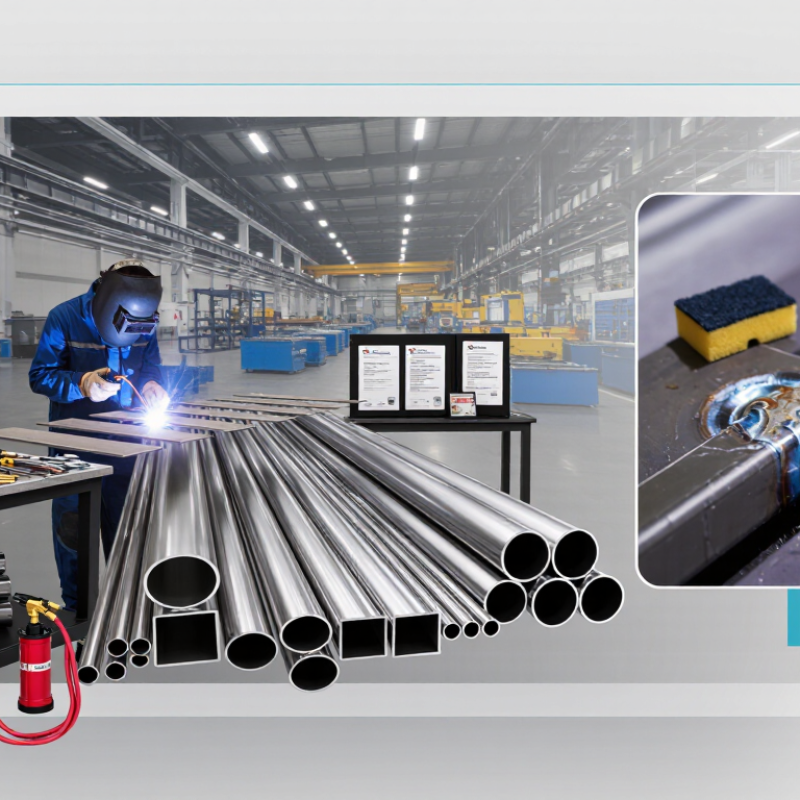
Real project experience matters. A capable supplier should explain how its team manages TIG or MIG welding, joint preparation, distortion, and heat tint. Ask for production samples, weld photographs, and test results from comparable orders. Details matter, such as clean worktables, dedicated stainless-steel tools, and proper post-weld cleaning. Passivation may also be necessary when corrosion resistance is critical. In some applications, qualified procedures and suitable 308L filler metal should be reviewed by an experienced engineer.
No supplier is perfect. Low prices can hide weak traceability, rushed inspection, or inconsistent finishing. I have seen attractive samples fail to represent regular production, so one successful piece proves little. A reliable evaluation should include factory audits, sample approval, payment milestones, packaging checks, and independent inspection when the project justifies it. Communication should remain specific, not promotional. Can the supplier explain tolerances, lead times, weld acceptance criteria, and corrective actions?
The best choice is not always the largest factory. It is the supplier that documents its process, admits limitations, and responds with evidence. This guide examines practical criteria for selecting a dependable China supplier for Welding 304 Stainless Steel, while recognizing that every application requires careful technical review.
304 stainless steel is widely selected for food equipment, tanks, and architectural fabrication. ASTM A240/A240M-24 specifies approximately 18–20% chromium and 8–10.5% nickel for standard 304 plate. These elements support corrosion resistance, but welding can reduce performance if heat is poorly controlled. The common mistake is treating 304 as completely forgiving.
During welding, the material may remain between 450°C and 850°C. Chromium carbide can form at grain boundaries in this range, reducing local corrosion resistance. Using 304L filler, commonly classified as ER308L, helps lower carbon-related sensitization risks.
AWS D1.6/D1.6M also emphasizes qualified procedures, suitable shielding, and controlled heat input for stainless steel work. Keep surfaces free from oil, carbon steel dust, and embedded iron. A clean weld still requires inspection.
Tips: Ask a China supplier for mill certificates, heat numbers, and welding procedure records. Confirm plate chemistry against ASTM A240/A240M. Control interpass temperature, and avoid unnecessary weaving. Argon shielding should protect the weld pool and root side. Purging matters. A practical trial weld is valuable, because drawings do not reveal every fabrication weakness. I would also request bend or corrosion testing when service conditions are severe. Supplier claims sound convincing, but traceable records and test results deserve greater trust.
Choosing the best China supplier for welding 304 stainless steel requires more than comparing prices. A reliable supplier should provide clear material traceability, stable welding quality, and realistic delivery promises. Ask for mill certificates, heat numbers, and positive material identification records. These documents help confirm the stainless steel grade before fabrication begins. Check whether the factory follows documented welding procedures and records operator qualifications. A small welded sample can reveal penetration problems, discoloration, or uneven finishing. It is often more useful than polished catalog photos.
A dependable supplier communicates details early. Confirm thickness tolerance, surface finish, weld inspection methods, packaging, and acceptable defect limits. For repeated orders, request production samples and a measurable quality plan. An audit should include storage areas, cutting equipment, welding stations, and final inspection. Clean material storage matters. Rust contamination can begin with one careless handling step. Suppliers should also explain how they manage delays and replacement parts. No supplier is perfect. A factory that admits limitations may be more trustworthy than one promising everything.
Tips: Request a video inspection before shipment. Compare certificates with actual heat numbers. Keep approved samples for future checks. Clarify who pays for rework. Do not judge quality from price alone. A cheaper quote may hide thinner material, weaker inspection, or unstable lead times. Also review communication speed over several weeks, not one impressive conversation. Small gaps in communication can become expensive production problems.
A reliable supplier should show how 304 stainless steel moves through the factory. Ask about cutting, forming, welding, passivation, and final inspection. TIG welding suits thin sections and visible seams. Automated welding can improve consistency on repeated parts. However, automation cannot correct poor joint preparation.
Review the supplier’s ISO 9001 system, material certificates, and welder qualifications. Request EN 10204 3.1 certificates or equivalent records for each steel batch. A proper Welding Procedure Specification should define current, shielding gas, filler metal, and heat control. Inspectors should verify weld appearance, dimensions, surface cleanliness, and penetration. Dye penetrant testing may reveal cracks that visual checks miss. Positive material identification also helps prevent steel mix-ups.
Ask for traceability from the heat number to the finished component. Factory records should include inspection dates, equipment calibration, and nonconformance actions. Sample production is useful, but one successful sample proves little. An on-site audit can reveal storage problems, weak documentation, or rushed finishing. I have seen polished inspection reports hide inconsistent weld quality. This is why independent testing remains valuable for critical parts. No supplier is perfect. A serious supplier explains defects openly and shows how they were corrected. Supplier selection should depend on repeated evidence, not attractive photographs or low pricing.
Best China Supplier for Welding 304 Stainless Steel?
A serious comparison starts with the specification, not the lowest quotation. For 304 stainless steel, request chemical composition, tensile strength, surface finish, dimensions, and welding condition. ASTM A240 covers plate and sheet requirements, while AWS D1.6 provides stainless steel welding guidance. Ask for an EN 10204 3.1 material certificate and heat-number traceability. The International Stainless Steel Forum reported about 58.4 million tonnes of global crude stainless production in 2023. Large output does not guarantee consistent quality.
Pricing needs a fair basis. Compare the same thickness, finish, tolerance, packing, and delivery term. Separate material cost from cutting, welding, inspection, and freight. Nickel remains a major cost driver. The World Bank Commodity Markets Outlook identifies nickel as a volatile industrial input. A low quote may hide weaker inspection or longer transport. I would not trust a price comparison without a landed-cost sheet.
Lead time should be written in calendar days. Standard 304 items may ship within 7–15 working days, while welded or custom-fabricated parts need longer planning. Treat this as a working estimate, not a promise. Review production capacity, sample approval, inspection timing, and replacement procedures. Service matters in small details: clear drawings, fast technical replies, moisture-resistant packing, and photo records before shipment. One weakness remains. Many buyers compare price first and discover quality gaps later.
| Comparison Dimension | Supplier Profile A Standard Stock Program | Supplier Profile B Welding-Focused Mill | Supplier Profile C Custom Fabrication Program | Supplier Profile D Large-Volume Export Program |
|---|---|---|---|---|
| Typical product form | 304 stainless steel sheet and plate | 304 stainless steel welded pipe and tube | Laser-cut, bent, and welded 304 components | 304 coils, sheets, plates, and welded pipe |
| Material designation | AISI 304 / UNS S30400 | AISI 304 / UNS S30400 | AISI 304 / UNS S30400 | AISI 304 / UNS S30400 |
| Common product standards | ASTM A240; EN 10088-2 | ASTM A312; ASTM A554; EN 10217-7 | ASTM A240 for sheet; agreed fabrication drawings | ASTM A240, ASTM A312, ASTM A554; EN equivalents available |
| Typical chemical limits, mass % | Cr 18.0–20.0; Ni 8.0–10.5; C ≤0.08 | Cr 18.0–20.0; Ni 8.0–10.5; C ≤0.08 | Cr 18.0–20.0; Ni 8.0–10.5; C ≤0.08 | Cr 18.0–20.0; Ni 8.0–10.5; C ≤0.08 |
| Minimum tensile strength, typical standard value | 515 MPa minimum | 515 MPa minimum | 515 MPa minimum before fabrication | 515 MPa minimum |
| Minimum yield strength, typical standard value | 205 MPa minimum | 205 MPa minimum | 205 MPa minimum before fabrication | 205 MPa minimum |
| Available surface finishes | 2B, BA, No. 4, and No. 8 by order | Polished, brushed, annealed, and pickled | 2B, brushed, mirror-polished, and customer-specified finish | 2B, BA, No. 4, polished, and pickled |
| Typical thickness or size range | 0.4–12 mm; standard sheets up to approximately 1,500 × 3,000 mm | Outside diameter approximately 6–630 mm; wall thickness commonly 0.5–20 mm | Sheet thickness approximately 0.8–12 mm; dimensions based on drawings | Coil thickness approximately 0.3–6 mm; plate thickness up to approximately 100 mm subject to mill capability |
| Indicative export price for 304 flat products | USD 2.70–3.60 per kg, FOB China | Not normally quoted as flat product; welded tube pricing is usually USD 3.20–5.20 per kg | USD 4.50–9.00 per kg including basic processing, depending on geometry and volume | USD 2.60–3.40 per kg for larger-volume standard orders, FOB China |
| Minimum order quantity | Typically 1–5 metric tons | Typically 1–3 metric tons or one production batch | Often 50–200 pieces, depending on part complexity | Typically 10–20 metric tons for the most competitive pricing |
| Typical production lead time | 15–25 calendar days for standard sizes | 20–35 calendar days, including welding and testing | 25–45 calendar days after drawing approval | 25–40 calendar days for mill production and export preparation |
| Quality documents normally available | EN 10204 3.1 mill test certificate, dimensional report, packing list | EN 10204 3.1 certificate, hydrostatic or eddy-current test report, dimensional report | Material certificate, welding procedure records, inspection report, and drawing-based checklist | EN 10204 3.1 certificate, third-party inspection by arrangement, packing and weight records |
| Welding-related support | Basic recommendations for TIG, MIG, and resistance welding | Weld procedure guidance, tube-end preparation, and weld inspection options | Welding procedure review, fixture planning, and weld appearance control | Standard welding guidance; additional testing available for project orders |
| Pre-shipment inspection | Visual, dimensional, surface, and quantity inspection | Visual, dimensional, weld, pressure, and material-traceability checks | First-article inspection plus dimensional and weld-quality checks | Batch inspection with optional independent third-party verification |
| Packaging and logistics | Export seaworthy bundles, waterproof paper, steel strapping, wooden supports | End caps, waterproof wrapping, bundled or wooden-crated packing | Protective film, separators, wooden cases, and part identification labels | Container loading plans, reinforced bundles, and export documentation support |
| Best fit for buyers | Routine sheet and plate purchasing with flexible quantities | Projects requiring welded tubes, weld testing, and traceability | Low-to-medium volume custom parts with fabrication requirements | Large, repeat orders where unit price is the main priority |
| Overall selection priority | Good balance of availability, documentation, and moderate lead time | Strong choice when welding quality and testing are critical | Strong choice when design assistance and finished components are required | Strong choice for high-volume orders and long-term supply contracts |
Choosing the best China supplier for welding 304 stainless steel requires more than comparing quotations. Start with samples. Request welded coupons from the same 304 heat and thickness as production. Check surface finish, penetration, distortion, and discoloration. Ask for mill certificates, heat numbers, PMI results, and welding procedure qualifications.
World Stainless reported 58.4 million tonnes of stainless steel production in 2023, showing a large and competitive supply base. Scale alone proves little. Audit the factory’s welding cells, qualified operators, shielding-gas controls, inspection equipment, and maintenance records. Review recent delivery performance, not only advertised capacity. A supplier producing 10,000 parts monthly may still fail during peak demand. This is where careful questioning matters.
Tips: Compare three sample batches, not one. Record weld size and visual defects with photographs. Confirm whether inspection is internal or independently witnessed. Review 12 months of on-time delivery data, rejection rates, corrective actions, and backup plans for raw materials. Ask for a realistic production schedule, including weekends and holidays. ISO 9001 certification supports process control, but it cannot replace factory evidence. A polished audit can still miss weak traceability. I have seen acceptable samples followed by unstable mass production; supplier verification must continue after the first purchase order.
Phone: (256) 845-1255 or (256) 845-4493
Fax: (256) 845-1321 or (256) 845-4468
© 2025 Heritage Wire Harness, LLC