Top 10 Benefits of Using 430 Stainless Steel Strips in Industry?
In the industrial landscape, materials play a crucial role in determining efficiency and durability. Among these, 430 Stainless Steel Strips stand out for their versatility and cost-effectiveness. This type of stainless steel is known for its exceptional corrosion resistance, making it ideal for various applications, from automotive components to kitchen equipment.
The popularity of 430 Stainless Steel Strips stems from their availability and ease of fabrication. Industries benefit from their formability and strength. Many manufacturers appreciate the quality these strips provide, yet some may overlook their limitations. For example, while they resist oxidation, they may not withstand extreme temperatures as well as other stainless steel grades.
Understanding the benefits and drawbacks of 430 Stainless Steel Strips is essential for informed decision-making. This knowledge can enhance production outcomes and reduce costs, leading to more sustainable practices in industrial settings. In essence, incorporating 430 Stainless Steel Strips into advanced manufacturing processes showcases a blend of reliability and innovation.
Benefits of Corrosion Resistance of 430 Stainless Steel Strips
The corrosion resistance of 430 stainless steel strips makes them a popular choice in various industries. This type of stainless steel is known for containing chromium, which enhances its ability to resist rust and oxidation. In environments where exposure to moisture and chemicals is frequent, 430 stainless steel shows remarkable durability. This quality ensures longevity, reducing replacement costs and maintenance efforts.
Another noteworthy aspect is its performance in high-temperature conditions. While not as heat resistant as some alloys, 430 stainless steel can still withstand moderate heat without significant degradation. This can be crucial in applications such as kitchen equipment or automotive parts. However, users must be mindful of conditions that may lead to pitting or crevice corrosion. Regular inspections and adherence to proper care can help mitigate these risks.
Moreover, 430 stainless steel is relatively easy to clean and maintain. Its smooth surface prevents food and debris from sticking, making it valuable in food processing industries. Even so, neglecting routine cleaning can lead to buildup that compromises its aesthetic and functional qualities. By understanding both its advantages and limitations, industries can make informed decisions about using 430 stainless steel strips effectively.
Cost-Effectiveness in Manufacturing Processes with 430 Stainless Steel
In industrial settings, cost-effectiveness is a primary concern. Using 430 stainless steel strips optimizes manufacturing processes. This material offers a balance between durability and affordability. The inherent corrosion resistance makes it ideal for various applications. Industries benefit from lower maintenance costs due to its longevity.
One tip is to assess the thickness of the strips. Thicker strips may provide additional strength but can increase costs. Evaluate the specific needs of your project to make informed decisions. Another consideration is the surface finish. A smooth finish can reduce friction in applications where components interact.
Choosing 430 stainless steel strips may seem straightforward, yet it requires thought. Understanding the specific requirements of your application is essential. Sometimes, industries overlook the nuances, like the strip's width or tolerance levels. Paying attention here can lead to better performance and efficiency.
Versatility of 430 Stainless Steel Strips Across Various Industries
The versatility of 430 stainless steel strips makes them highly sought after across various industries. This ferrous alloy is known for its excellent corrosion resistance and aesthetic appeal. It is often used in food processing, automotive parts, and architectural applications. The material's ability to withstand high temperatures and maintain structural integrity is crucial in these sectors.
In the food industry, 430 stainless steel is vital for equipment like refrigerators and conveyor belts. Its easy-to-clean surface meets health regulations. In automotive manufacturing, these strips are found in exhaust systems and trims, providing both functionality and style. For architectural design, they enhance the visual quality of buildings while offering strong protection.
However, it’s important to note some limitations. While 430 stainless steel strips are resistant to rust, they can corrode in harsh environments. This aspect requires careful consideration during selection. Not all applications should use this material, especially those exposed to chloride environments. Balancing these factors is essential for optimal use. Understanding the capabilities and shortcomings of 430 stainless steel strips will lead to better decision-making in various industries.
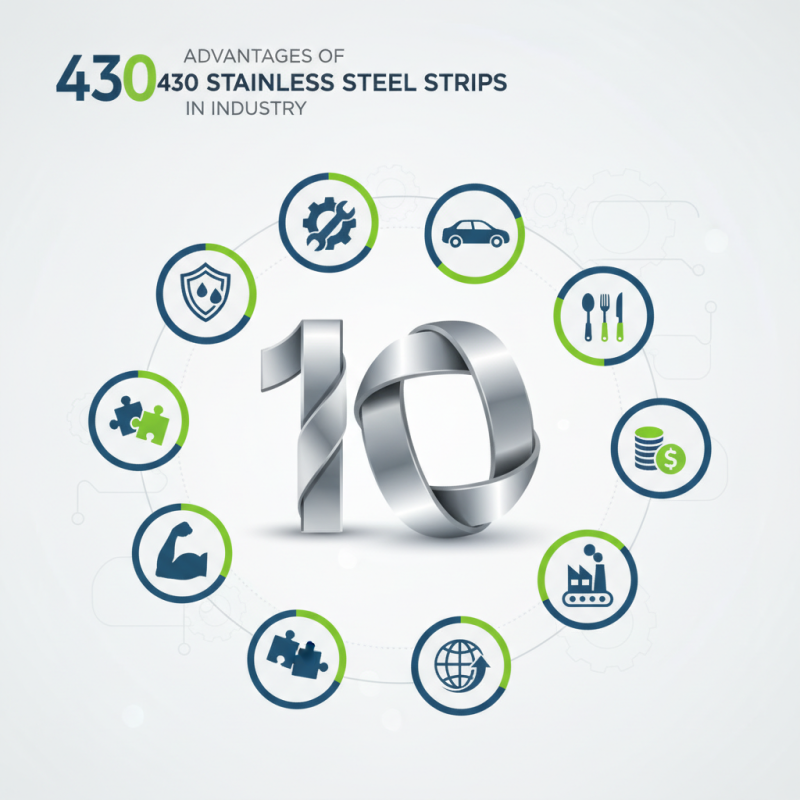
Top 10 Benefits of Using 430 Stainless Steel Strips in Industry
| Benefit | Description |
| Corrosion Resistance | 430 stainless steel offers excellent resistance to corrosion, making it ideal for outdoor and humid environments. |
| Cost-Effectiveness | Compared to other stainless steels, 430 is more affordable, providing a balance of quality and price. |
| Aesthetic Finish | Its smooth and shiny finish is appealing for decorative applications, enhancing product appearance. |
| Magnetic Properties | Being magnetic, 430 stainless steel is useful in applications where magnetic separation is needed. |
| Formability | It offers good formability, allowing it to be fabricated into various shapes and sizes easily. |
| High Durability | Excellent toughness ensures a long lifespan, making it suitable for heavy-duty applications. |
| Resistance to Oxidation | 430 resists scaling and oxidation up to moderate temperatures, useful in high-temperature environments. |
| Low Maintenance | Requires minimal maintenance due to its durability and corrosion resistance, reducing overall costs. |
| Recyclability | Eco-friendly option as 430 stainless steel is fully recyclable, promoting sustainability in manufacturing. |
| Versatility | Applicable in various industries including automotive, construction, and home appliances due to its versatile properties. |
Improved Aesthetic Appeal and Finish of Products Utilizing 430 Stainless Steel
Utilizing 430 stainless steel strips in products significantly enhances their aesthetic appeal. The smooth and polished finish of these strips gives items a modern and sophisticated appearance. Manufacturers often choose this material for its ability to mirror light effectively, creating a visually striking effect. The bright, reflective surface attracts attention, making end products more desirable.
Moreover, the versatility of 430 stainless steel allows for various designs. It can be easily shaped or formed to match specific product needs. This flexibility leads to unique designs that stand out in a competitive market. However, imperfections can occur during processing, sometimes requiring additional quality assurance measures. Industries should consider this when implementing 430 stainless steel in their production lines.
While the aesthetic benefits are clear, using 430 stainless steel requires careful consideration of its properties. It is not as resistant to corrosion as other stainless steel grades. This can impact long-term visual quality in certain environments. Manufacturers must weigh these factors when opting for this material in their designs.
Enhanced Durability and Longevity of Components Made from 430 Stainless Steel
430 stainless steel strips have gained popularity in various industries due to their enhanced durability and longevity. These strips resist corrosion well, making them suitable for environments that expose them to harsh conditions. They are often used in manufacturing components where integrity and strength are crucial.
Components made from 430 stainless steel offer impressive wear resistance. This means they can withstand stress and strain without significant degradation. Their longevity translates into reduced maintenance costs over time. When industries opt for this material, they often find that fewer replacements lead to greater efficiency in operations.
However, not all applications may benefit from 430 stainless steel. Depending on the specific environmental conditions, different grades or materials may perform better. It's essential to consider the unique requirements of a project before deciding on materials. The potential for misuse of this steel grade in inappropriate settings serves as a reminder of the importance of understanding material properties.