2026 Top Assembly Wire Types for Your Next Project?
In the fast-paced world of assembly, choosing the right assembly wire can make a significant difference in your project's success. Assembly wires come in many types, each suited for different applications and environments. This selection process can be daunting, especially with the myriad of options available in 2026.
Understanding the unique properties of assembly wire is crucial. From the flexibility of stranded wires to the strength of solid wires, each type has its own advantages. For instance, stranded assembly wire often provides better flexibility for tight spaces, while solid wire may offer superior conductivity and strength.
However, not every wire will suit your needs perfectly. Some may lack durability or may not withstand specific environments effectively. It’s essential to reflect on your specific requirements. The ideal assembly wire should fit your project’s criteria, blending performance with cost-effectiveness. Navigating these choices is not always easy, but the right decision can lead to a successful assembly project.

Top Assembly Wire Types: An Overview of Industry Standards
When selecting assembly wires for your next project, understanding industry standards is crucial. Various types of wires serve different purposes. A common choice is stranded wire. It provides flexibility, making it easy to work with. This type is excellent for applications where movement is involved.
Solid wires, on the other hand, offer durability and are suitable for permanent installations. Their rigid structure allows for a stable connection. The drawbacks, however, include difficulty in bending and potential breakage under stress.
It’s essential to weigh these factors when choosing the right type.
Insulation also plays a significant role. Wires come with different insulation materials. PVC, for example, is affordable and widely used. Yet, it may not withstand high temperatures. In contrast, silicone insulation performs well under heat but can be costly. Your decision should reflect the requirements of the project. This balance between cost and performance is often challenging but necessary.
Key Characteristics of Popular Assembly Wire Types for 2026
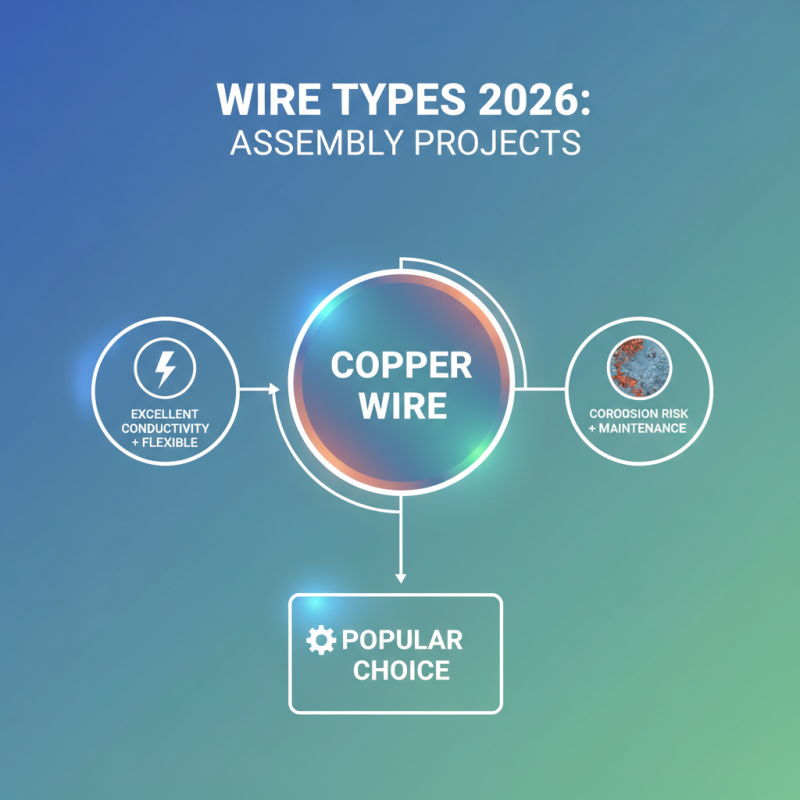
As assembly projects evolve, selecting the right wire type becomes crucial. In 2026, several styles stand out. Copper wire remains a popular choice due to its excellent conductivity. It’s flexible and easy to work with, but it can corrode over time. Users must consider maintenance.
Aluminum wire, on the other hand, is lightweight and cost-effective. It’s ideal for large-scale projects. However, it requires careful connection techniques to avoid overheating. Stainless steel wire offers strength and resistance to corrosion but may be less flexible.
Each wire type has its strengths and weaknesses. Choosing the right one should involve a clear understanding of project requirements. Testing different types can yield insights but may also lead to unexpected challenges. Balancing cost, durability, and performance is essential for success in any project.
Comparative Analysis of Copper vs. Aluminum Wires in Assemblies
When considering assembly wire types, copper and aluminum are the most commonly used materials. Copper wires are well-known for their excellent conductivity. They can deliver 60% more current than aluminum wires of the same gauge. This can be crucial in high-performance applications. However, copper is heavier and more expensive than aluminum. It’s also more prone to corrosion in some environments.
On the other hand, aluminum wires offer several advantages. They are lightweight, making them easier to handle. Additionally, they are more cost-effective. A recent industry report indicated that aluminum can be 30% cheaper than copper for the same length. However, one must be careful with the connection points, as aluminum can oxidize, potentially leading to increased resistance over time.
**Tip:** Always consider the specific requirements of your project. If weight and cost are critical, aluminum might be the better choice. However, if conductivity is paramount, copper cannot be overlooked.
Choosing the right wire material can impact performance and reliability. Evaluate your project’s unique demands. This analysis can help identify the ideal wire type. Remember, the wrong choice could lead to inefficiencies.
2026 Top Assembly Wire Types for Your Next Project
| Wire Type |
Conductivity (IACS) |
Weight (g/m) |
Corrosion Resistance |
Cost per kg |
| Copper |
100% |
8.96 |
Moderate |
$10 |
| Aluminum |
61% |
2.70 |
High |
$6 |
| Copper-Clad Aluminum |
80% |
6.40 |
Moderate |
$8 |
Emerging Trends in Assembly Wire Technology and Their Applications
In recent years, assembly wire technology has evolved significantly. Innovations are driving performance and efficiency in numerous applications. One standout trend is the shift towards lightweight materials. These wires enhance ease of installation and reduce overall project costs. Many sectors are embracing these materials to streamline their production processes.
Another aspect gaining traction is the focus on sustainability. Environmentally friendly wires are now available. These products use recyclable materials, reducing waste and promoting eco-conscious practices. However, the transition is not always smooth. Many technicians feel uncertain when adopting new materials. There is still a need for education and training.
Emerging technologies, like smart wires, are also making waves. These wires can monitor their own performance in real-time. This capability allows for proactive maintenance and reduces downtime. Yet, integrating smart technology raises challenges. It requires upfront investment and a shift in mindset for many engineers. Balancing innovation with practicality is essential for success in future projects.
Safety Standards and Regulations for Assembly Wires in 2026 Projects
As we approach 2026, safety standards for assembly wires are gaining more attention. Industry reports indicate that compliance with safety regulations is essential to protect workers and equipment. In the United States, the National Electrical Code (NEC) and Occupational Safety and Health Administration (OSHA) play pivotal roles in setting these standards. They focus on wire insulation, load capacity, and environmental factors.
Wire types must meet specific fire resistance ratings. For instance, low-smoke, zero-halogen wires are becoming common in commercial settings. According to a recent study, approximately 30% of electrical fires are linked to improper wire usage. This statistic highlights the need for adherence to safety standards. Additionally, shortcomings in insulation can lead to dangerous situations, yet many projects overlook thorough safety checks.
It is critical to consider regional differences in regulations. European markets may prioritize different standards compared to the U.S. Compliance can become complex, especially for multinational projects. The lack of uniformity may lead to costly delays. Understanding the local regulations is not just a recommendation; it should be mandatory. The consequences of negligence can be severe, affecting not just finances but also lives.